Blog
Bên cạnh resort quy mô lớn hay tòa nhà chọc trời, các khách sạn boutique với những tầng không gian đậm tính nghệ thuật đang trở thành một lựa chọn đáng cân nhắc cho chuyến đi sắp tới. Tuần này, WWK's Choice sẽ cùng bạn giải mã sức hút của 3 tọa độ lưu trú độc bản, bổ sung vào danh sách gợi ý cho hành trình đầy trải nghiệm của bạn.
Mục lục
Capella Hanoi
Khúc giao hưởng giữa lòng Thủ Đô

Nằm trên một con phố thanh bình ngay cạnh Nhà hát Lớn Hà Nội, Capella Hanoi như một “cỗ máy thời gian” đưa du khách “sống lại” thời kỳ hoàng kim của nghệ thuật Opera vào những năm 1920.
Được thiết kế bởi kiến trúc sư lừng danh Bill Bensley, Capella Hanoi là sự tri ân dành cho nghệ thuật Opera và phong cách kiến trúc Art Deco. Ngay từ khi bước qua cánh cửa, du khách sẽ đắm mình vào không gian lộng lẫy, ngắm nhìn những mảng màu rực rỡ, đường nét hình học sắc sảo và các món đồ trang trí thủ công được sắp đặt đầy ý đồ. Một tổng thể vừa kịch tính, vừa tinh tế.


Khách sạn được tái hiện như một lữ quán sang trọng. Nơi đây từng là chốn dừng chân của những nghệ sĩ, nhà thiết kế và nhà soạn nhạc vĩ đại nhất thế giới. Capella Hanoi sở hữu 47 phòng nghỉ và suite. Đáng chú ý, không có hai căn phòng nào hoàn toàn giống nhau. Mỗi phòng được đặt theo tên của một nghệ sĩ, nhà soạn nhạc hay một vở Opera kinh điển.
Tại đây, nghệ thuật không chỉ nằm ở những bức tranh treo tường mà còn hiện hữu trong từng chi tiết nhỏ. Từ những bức phác thảo phục trang gốc, những món kỷ vật sân khấu cho đến những kịch bản viết tay… khách sạn lưu giữ hơn 1000 món đồ cổ, bức họa chân dung hay trang phục biểu diễn nguyên bản được săn tìm và sưu tầm từ khắp nơi trên thế giới. Lưu trú tại Capella Hanoi, du khách có cơ hội cảm nhận khoảng nghỉ của những “ngôi sao” sau một buổi biểu diễn hoành tráng.
Ghi chú cho bạn
Nhà hàng Hibana by Koki đạt 1 sao Michelin là điểm đến cho những tín đồ ẩm thực Teppanyaki Nhật Bản.

Azerai La Résidence Huế
Khúc vĩ thanh bên dòng Sông Hương
Tọa lạc dọc bờ sông Hương thơ mộng với tầm nhìn hướng thẳng ra Kinh thành Huế cổ kính, Azerai La Résidence - Huế như một chứng nhân lịch sử đưa du khách trở về không gian vương giả và lãng mạn của những năm 1930.

Trái tim của Azerai La Residence là tòa dinh thự cổ, từng là một phần của dinh Thống sứ Pháp, là chốn giao lưu của giới quan chức và quý tộc thượng lưu thời bấy giờ. Khách sạn là minh chứng rực rỡ cho phong cách kiến trúc Art Deco với những đường cong mềm mại, hình khối góc cạnh và các họa tiết hình học tinh xảo. Nhìn từ xa, tòa nhà như một con tàu trắng khổng lồ đang thả neo bên dòng sông, mang trong mình vẻ uy nghi và quyền quý của lịch sử.
Khách sạn sở hữu 122 phòng nghỉ và suite. Nhiều phòng sở hữu ban công rộng lớn nhìn ra khu vườn nhiệt đới xanh mướt hoặc sông Hương êm đềm. Dòng chảy thời gian hiện hữu trong từng chi tiết nhỏ. Từ chiếc quạt trần cổ điển, đồ nội thất bằng gỗ tối màu cho đến những bức ảnh tư liệu quý giá về Huế xưa… khách sạn giữ lại bầu không khí Đông Dương thuộc địa, trầm mặc và tinh tế.


Ghi chú cho bạn
Trải nghiệm tiệc trà chiều kiểu Pháp hoặc bữa tối lãng mạn trên du thuyền riêng của khách sạn dọc theo dòng sông Hương là hoạt động không thể bỏ lỡ dành cho các cặp đôi.

The Myst Đồng Khởi
Bản nhạc kịch Sài Gòn xưa
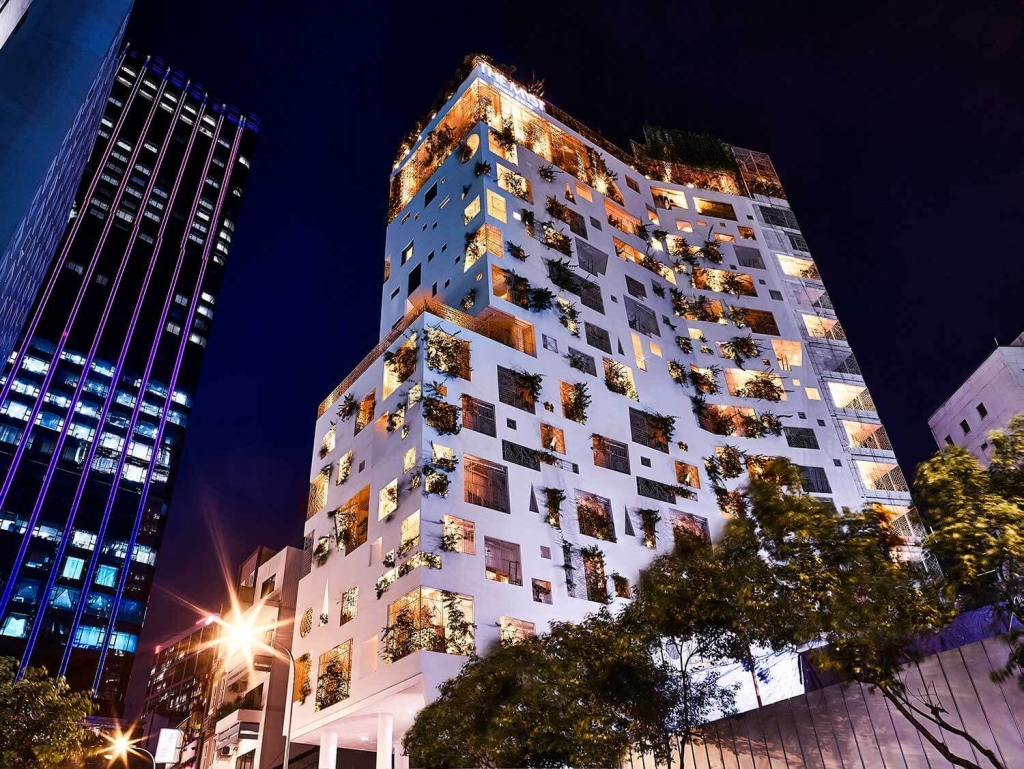
Nằm giữa trung tâm Thành phố Hồ Chí Minh sầm uất, khách sạn mang đến cảm giác tồn tại đặc biệt: Một tòa nhà trắng muốt với những ô cửa sổ sắp xếp ngẫu hứng và giàn dây leo xanh rì rủ xuống.
Được kiến tạo bởi các nhà thiết kế bản địa đầy tâm huyết, The Myst Đồng Khởi mang phong cách kiến trúc hiện đại nhiệt đới. Tiến vào sảnh chờ, du khách sẽ đắm mình vào không gian ấm cúng, cánh cửa gỗ nhuốm màu thời gian và các ô cửa sổ lồi lõm sắp xếp bất đối xứng.


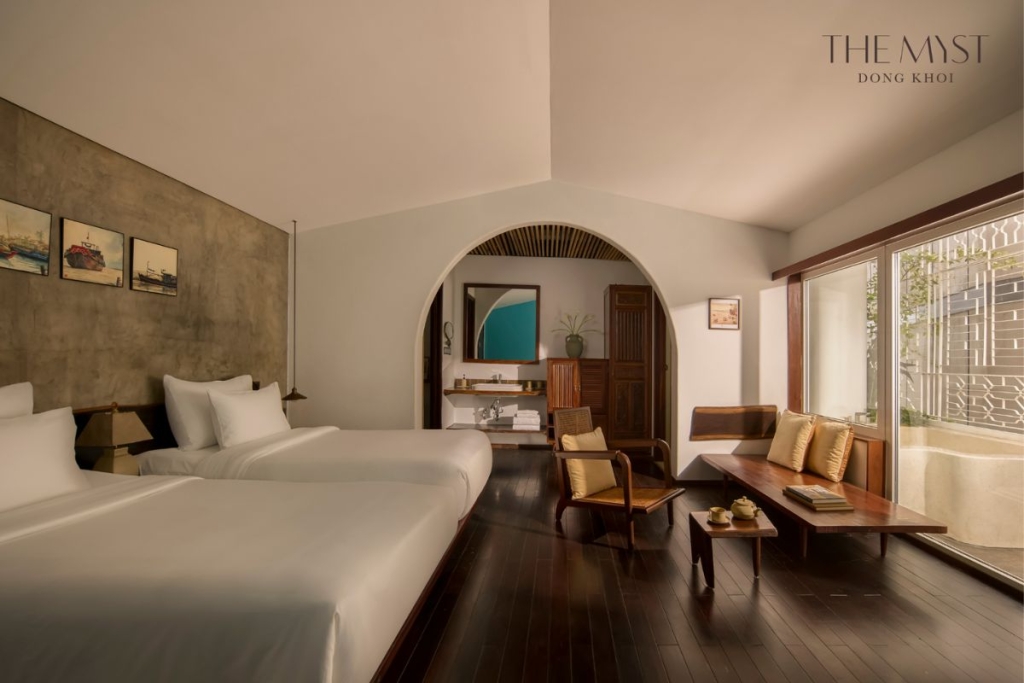
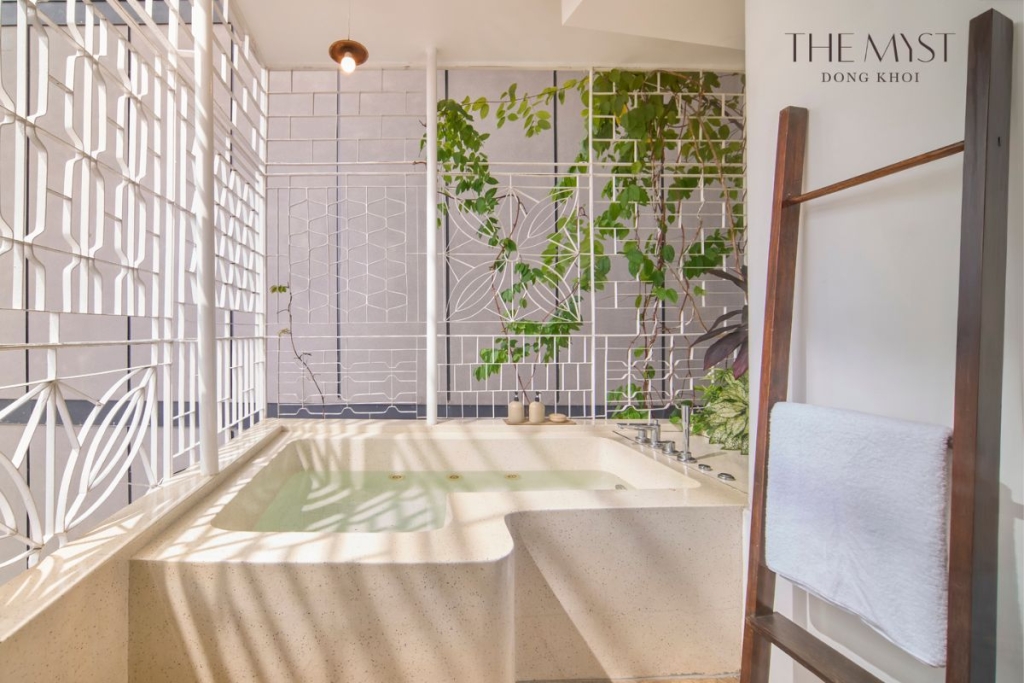
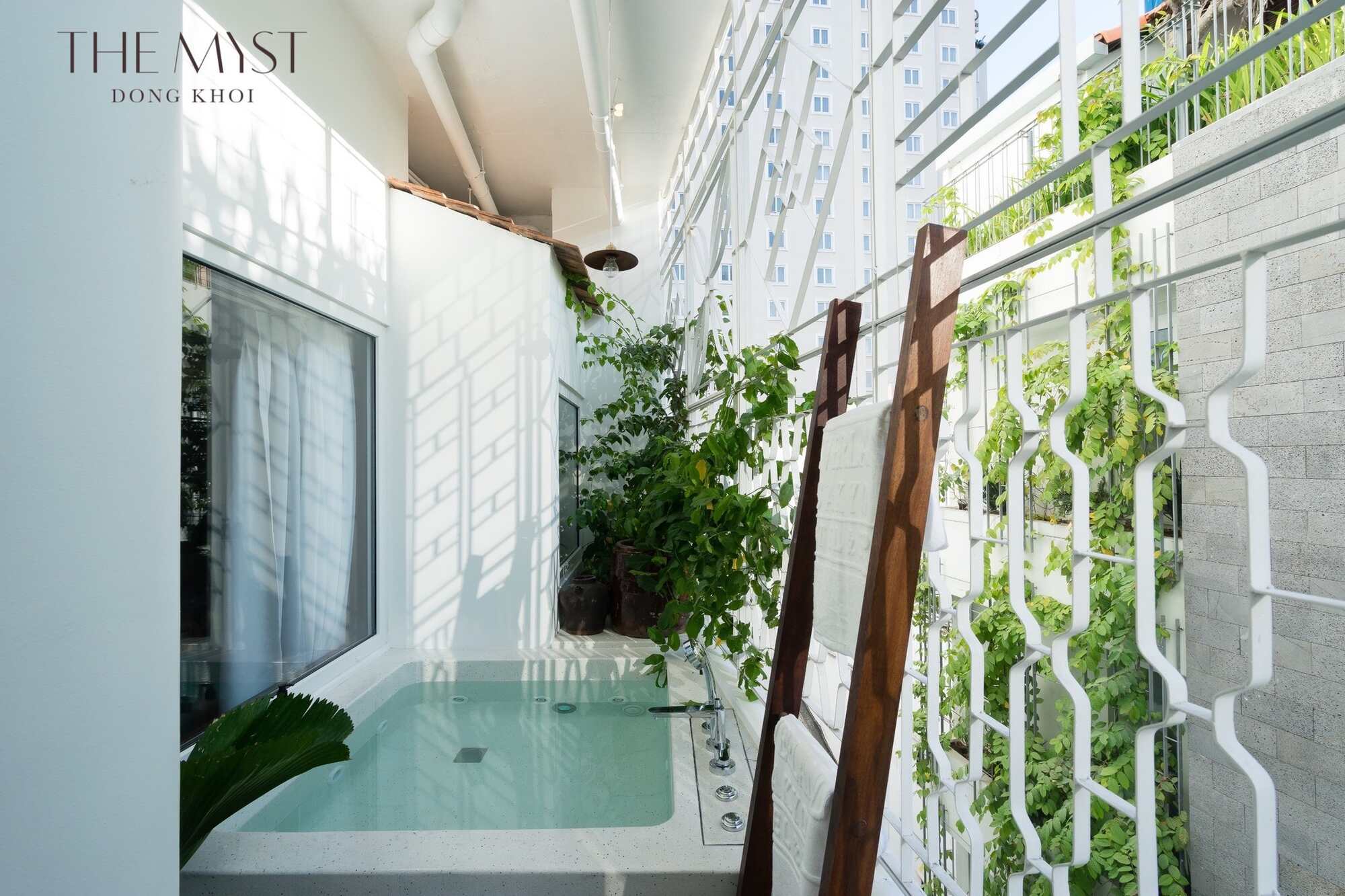
Bên trong mỗi phòng là sàn gỗ bóng loáng, chiếc điện thoại quay số cổ điển, bức tranh sơn dầu và những vật dụng bằng đồng được sắp đặt tinh tế. Đặc biệt, hầu hết các phòng đều sở hữu ban công rộng rãi với bồn tắm lộ thiên bằng đá hoặc gỗ, bao quanh là vườn cây xanh mát, giúp bạn tận hưởng giây phút thư giãn tuyệt đối giữa nhịp sống hối hả.
Từ những món cổ vật được trục vớt từ xưởng đóng tàu Ba Son cũ, những chiếc chìa khóa đúc đồng cho đến những bức tranh vẽ tay phong cảnh Nam Bộ… Thông qua trải nghiệm lưu trú, khách sạn truyền tải nét duyên dáng, phóng khoáng của vùng đất và con người phương Nam một cách tinh tế đến du khách.

Ghi chú cho bạn
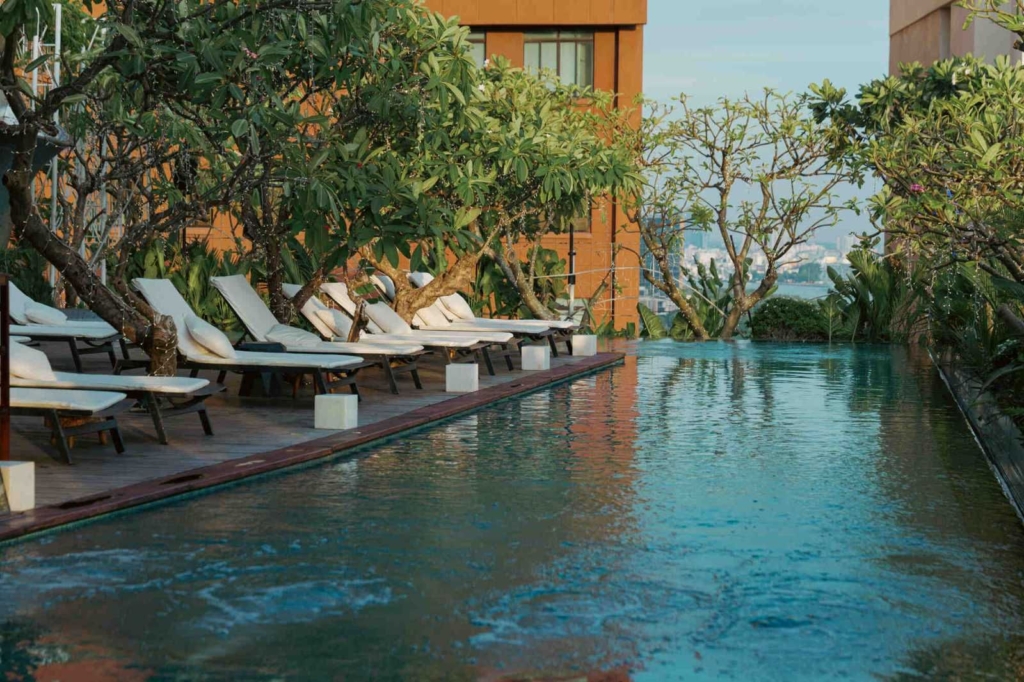
Hồ bơi vô cực trên tầng thượng là tọa độ lý tưởng để ngắm nhìn hoàng hôn buông xuống bên sông Sài Gòn.
Source: https://wowweekend.vn/
Blog
Ho Chi Minh City has roughly 80 hotels calling themselves "luxury" right now. Most don't earn the name. This guide doesn't list them. Instead it tells you the things that actually separate a real luxury stay from a five-star price tag, where in the city the gap matters most, and how we'd think about it if we were the ones booking.
What "luxury" really means here
Star ratings in Vietnam are issued by the local tourism authority and have nothing to do with whether a hotel feels luxurious. We have seen five-star plaques on properties where the front desk speaks broken English and the breakfast buffet runs out by 9am. We have also seen four-star boutiques run circles around them.
The honest test is this. Can the concierge get you a same-day table at Anan or Quince? Does someone answer the room phone at 2am? Is the spa run by therapists trained to international protocol, or by whoever the housekeeping manager promoted last month? Has the property earned outside recognition — Michelin Guide Hotels and Stays, World Luxury Hotel Awards, Forbes Travel Guide — that wasn't paid for? If most answers are yes, it's luxury. If they're no, you're paying for a number on a sign.
The Saigon luxury market breaks into three rough shapes. Big international chains with 200+ rooms, brand-consistent service, predictable everything. Heritage boutiques, usually under 150 rooms, design-led, with quirks and character you don't get from a Marriott or a Hilton. And modern riverside resorts, often newer builds with skyline views and pool decks. Your travel style decides which fits, not the star count.
Where to stay if you actually want the city
Location matters more in Saigon than in most cities. The traffic is bad, getting around eats your day, and the cultural heart is geographically small. So where you sleep changes what kind of trip you have.
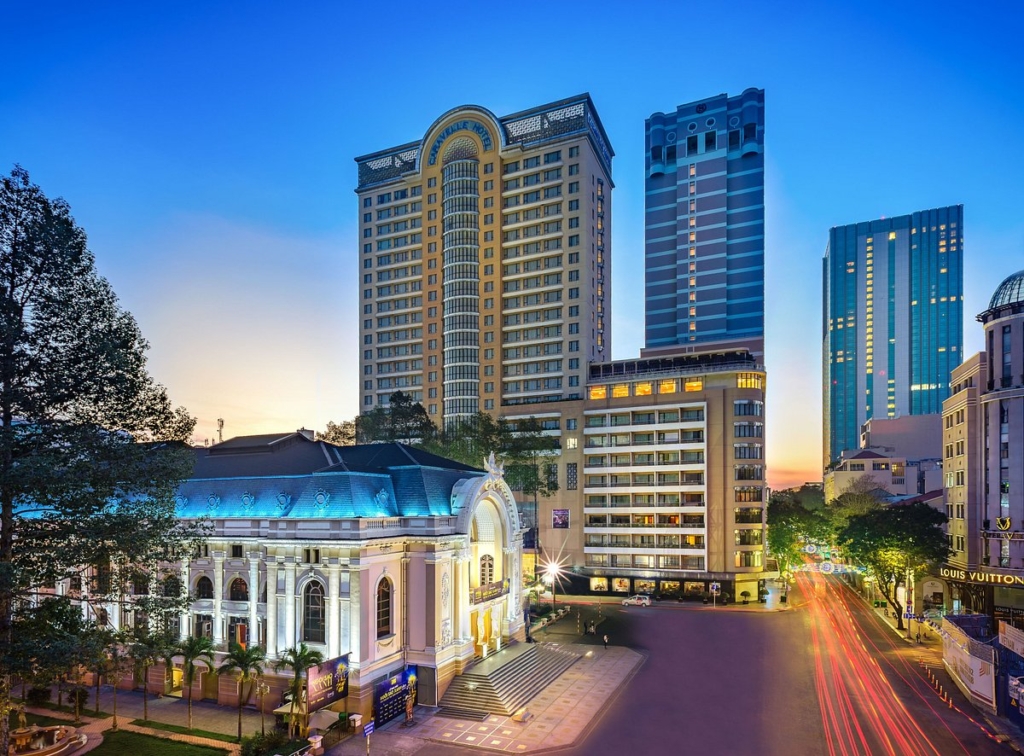
District 1 is the answer for almost everyone the first time. The Saigon Opera House, the Nguyễn Huệ pedestrian street, the Notre Dame Cathedral, Bến Thành Market — they're all within a 15-minute walk of each other. Hotels here range from grand-format five-stars on Đồng Khởi Street down to intimate boutiques tucked on side streets like Hồ Huấn Nghiệp and Mạc Thị Bưởi. If you only have three or four nights, don't stay anywhere else. District 1 is also the safest base for visitors, with the highest concentration of tourist police and well-lit streets after dark.
District 2 (Thảo Điền) is a different proposition. Expats live here. The pace is slower, the streets greener, the restaurants more international. About 25 minutes by car from District 1, which sounds fine until you're stuck in traffic at 6pm. Good for a second visit when you've already done the museums, or for travellers who hate noise and crowds.
District 7 (Phú Mỹ Hưng) is a planned suburb. Modern, clean, lots of serviced apartments and golf-resort-style hotels. Good for families with kids and long-stay business travellers. Wrong for a four-night culture trip.
Six things to weigh before you book
Once you've shortlisted three or four candidates, run them through this. The wrong question is "is it luxurious enough?" The right question is "luxurious in the ways I care about?"
- Walk distance to Nguyễn Huệ. Pull up Google Maps. Drop the hotel pin. Measure to Nguyễn Huệ Walking Street. Anything under 10 minutes' walk is gold. Over 20 minutes and you'll Grab everywhere, which is fine but changes the trip.
- What the concierge actually does. Before booking, email and ask three things: can you book a private heritage walking tour, can you get a same-day table at a hard-to-book restaurant, and what's the airport pickup arrangement. Vague answers are a red flag. Specific ones tell you everything. Some properties offer curated walking tours of District 1 as part of their concierge program.
- Has someone Vietnamese actually cooked here? Hotel restaurants are too often safe-bet international menus. A real luxury hotel will have at least one F&B outlet that takes Vietnamese cuisine seriously — not just pho for the foreigners but proper, hands-on regional cooking. Check the menu before booking. Cross-reference with the city's broader food map like our Thảo Điền dining guide.
- Awards you can verify. The Michelin Guide Hotels and Stays list, World Luxury Hotel Awards, Forbes Travel Guide, and Tripadvisor Travelers' Choice are the four worth checking. Awards alone won't make a stay great. But the absence of any external recognition at a luxury price point is a yellow flag.
- Room actually big enough. Entry-tier luxury in Saigon should give you 30 sqm minimum, a window that opens, ideally a balcony or French doors. Booking sites sometimes hide this. Check the property's own site or ask before paying.
- How they handle the airport. Tân Sơn Nhất is 25-45 minutes from District 1 depending on traffic. Better hotels include complimentary transfers for stays of three nights or more. The transfer experience tells you a lot — being met at arrivals with your name on a card versus finding the driver yourself sets the tone. For background on the route, see our Tân Sơn Nhất to District 1 guide.
About The Myst Đồng Khởi — because we should be transparent
You're reading this on our website, so we'll be straight with you. We're a 108-room boutique heritage hotel on Hồ Huấn Nghiệp Street. Four minutes' walk to the Nguyễn Huệ pedestrian street. Five to the Saigon River. Inducted into the Michelin Guide Hotels and Stays selection. Won the World Luxury Hotel Awards 2025 Global Winner for Luxury Cultural Hotel and Country Winner for Vietnam. Concierge runs 24 hours.
Not everyone should book us. If you want a Marriott-style branded experience, a poolside kids' club, or a 600-room resort with three restaurants and a casino, we're wrong for you. If you want a smaller hotel, walkable to everything that matters, with afternoon light through tall windows and a concierge who'll remember your name on day two, we might be exactly right. Take a look at our rooms and suites and check us against the six criteria above. If we don't fit, that's useful information too.
How to book without overpaying
Book direct. Almost always. Hotel-direct rates either match or beat what Booking.com and Agoda are showing, and direct bookings come with better cancellation terms, the chance of a complimentary upgrade if rooms are available, and a real person you can email about special requests. Third-party platforms are good for browsing options and comparing prices across cities. They're rarely the cheapest place to actually book.
On timing: November through March is peak. Cool weather, no rain, festival season, prices at their highest. April-May and September-October are shoulder months — same hotels, same service, 15-25% less. Avoid Tết 2027 (early February) only if you want a fully operational city; the holiday itself is one of the most culturally rich moments of the Vietnamese year and worth experiencing once.
Frequently asked questions
Which district is best for a luxury hotel stay in Saigon?
What actually makes a Saigon hotel "luxury" by international standards?
How much should I expect to pay per night?
Are any Saigon hotels on the Michelin Guide?
What's the best time of year to book a luxury Saigon stay?
What amenities should I expect at this price point?
Direct booking or Booking.com / Agoda — which is actually better?
Are luxury hotels in Saigon good for families with kids?
Thinking about The Myst Đồng Khởi?
108 boutique rooms, five minutes' walk from the Nguyễn Huệ Flower Street, surrounded by the quietest heritage corner of District 1. Our concierge speaks fluent English and will build your stay around the criteria that matter most to you — a private heritage walk, a signature dining sequence, or simply a room with afternoon light and a balcony.
→ Book direct for our best rate
Crafted by Silverland Hotels.
Blog
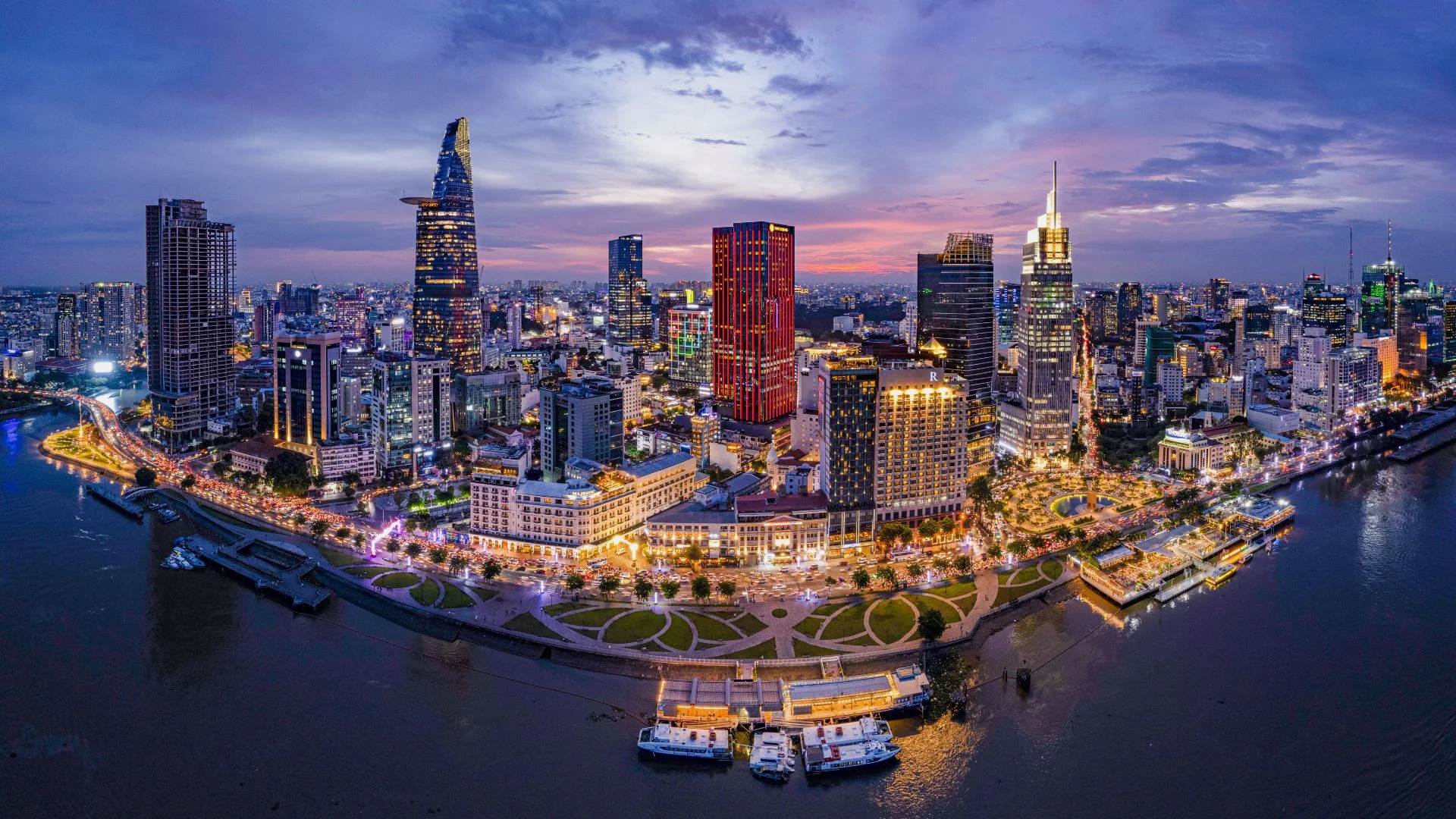
Tet Nguyen Dan, Vietnam's most luminous celebration, falls on Saturday, 6 February 2027 — opening the Year of the Goat. For visitors fortunate enough to arrive during these days, Saigon transforms: its avenues bloom with golden apricot branches, the Saigon River carries the scent of incense from family altars, and the city's restless rhythm softens into something quietly reverent. This guide is everything you need to plan your Tet 2027 visit with grace.
Tet 2027 in Saigon: Travel Guide
When is Tet 2027? Dates, duration and what to expect
Tet 2027 officially begins on Saturday, 6 February 2027 (mùng 1, the first day of the lunar new year), continuing through Sunday 7 February (mùng 2) and Monday 8 February (mùng 3) — the three most sacred days. The Vietnamese public holiday typically extends to a seven-to-nine-day national break, meaning offices, schools and many local businesses close from approximately 5 February (Tet Eve, known as Giao Thua) through 13 February.
This is the Year of the Goat (Đinh Mùi in the Vietnamese lunar cycle), traditionally associated with gentleness, artistry and quiet prosperity. The atmosphere in Saigon during Tet is unlike any other moment of the year — softer, more familial, and quietly festive.
What is Tet, really?
Tet Nguyen Dan — "Festival of the First Morning of the First Day" — is the most important holiday in Vietnamese culture, comparable in significance to Christmas, Thanksgiving and New Year combined for a Western audience. It marks the arrival of spring, the renewal of the family bond, and the honouring of ancestors. Families return from across Vietnam (and from overseas) to gather, to clean and decorate the home, to settle debts, and to welcome the year ahead with auspicious words and gestures.
For visitors, Tet offers a rare invitation into the most intimate side of Vietnamese life — provided you arrive with awareness of what is open, what is closed, and how to participate respectfully.
Saigon during Tet: atmosphere and what changes
Ho Chi Minh City during Tet feels remarkably different from the city you might know in October or June. The famously dense motorbike traffic thins to a fraction of its usual flow on mùng 1 and mùng 2 as residents retreat into family homes. Streets are swept, shops shuttered with red couplets pasted on their gates, and the air carries the fragrance of pomelo blossoms, fresh paint and burning sandalwood.
Most local restaurants, traditional markets and family-run cafés close from Tet Eve until at least mùng 4 or 5 — though hotels, international restaurants, convenience stores (Circle K, FamilyMart, GS25) and major tourist attractions remain open. For comprehensive guidance on staying safe and comfortable during this quieter period, see our tips for tourist safety in Saigon. Travellers staying in District 1 — the safest base for visitors — will find the most amenities open during the holiday window.
The 6 Tet experiences every visitor should plan for
1. Nguyen Hue Flower Street (Đường Hoa Nguyễn Huệ)
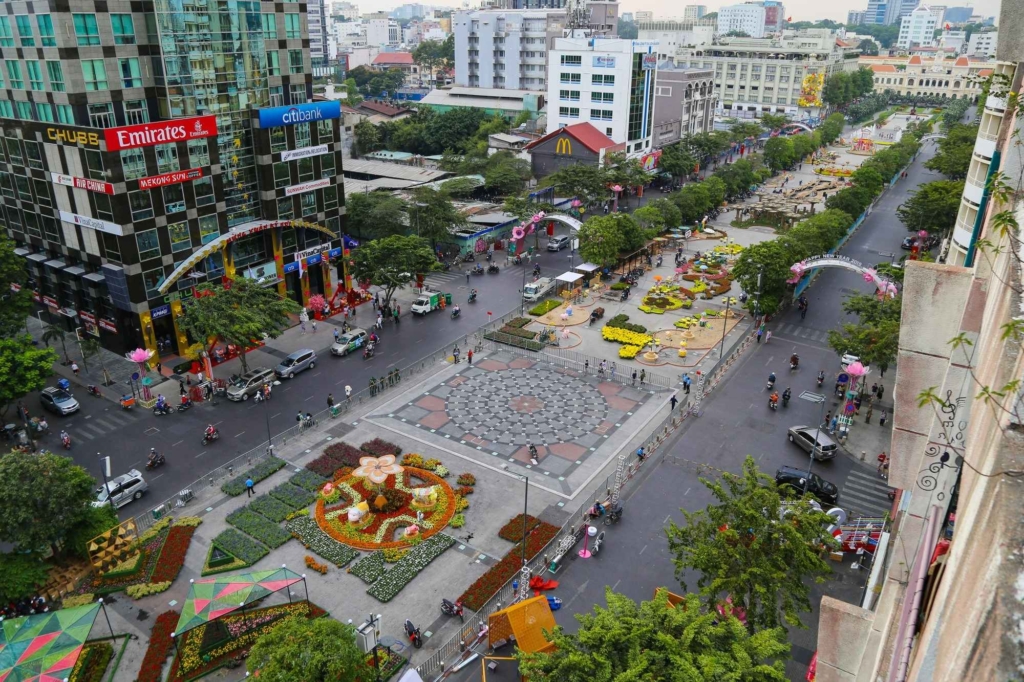
From approximately 3 February through 9 February, the Nguyễn Huệ pedestrian street is transformed into Saigon's most spectacular floral installation — over 100 metres of curated displays celebrating the Year of the Goat. Free, open day and night, photographable from any angle. Arrive after 7pm for the magical illuminations; mornings are quieter for unhurried photos.
2. Saigon River Tet fireworks
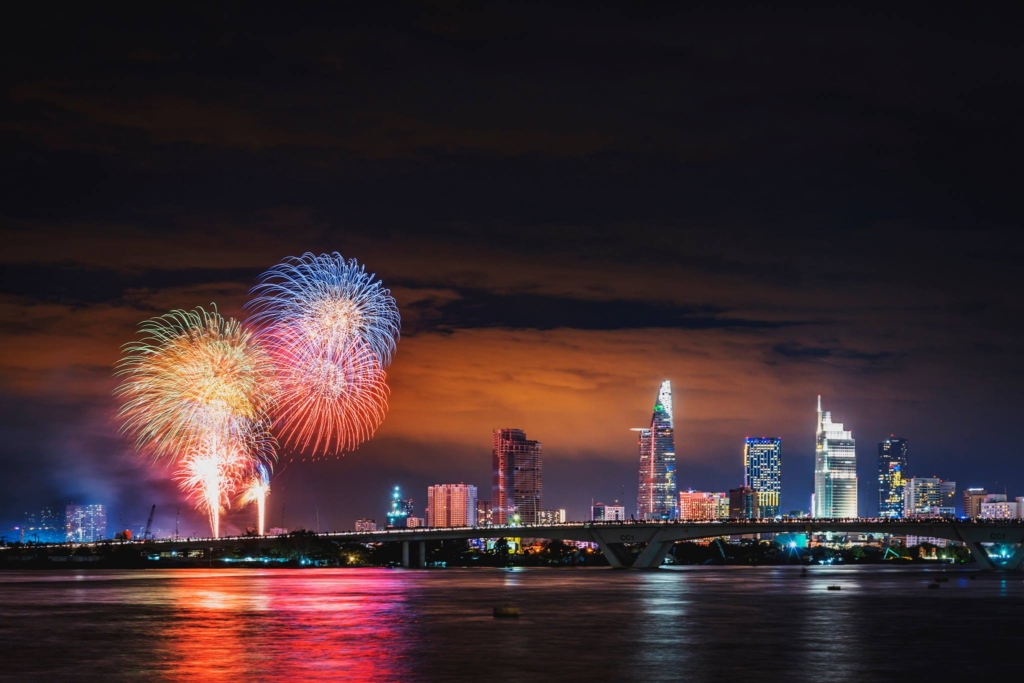
Saigon's biggest fireworks display lights the river at midnight on Tet Eve (5 February), typically launched from the Saigon River area in District 1 and a secondary site near Thủ Thiêm. Rooftop venues such as Chill Sky Bar and the riverside Bonsai Cruise booking decks offer privileged views — book several weeks ahead. Free public viewing from Bến Bạch Đằng Park and the Thủ Thiêm pedestrian bridge.
3. Pagoda visits — Vĩnh Nghiêm, Giác Lâm, Thiên Hậu
Vietnamese families visit pagodas during Tet to pray for fortune, health and family unity for the coming year. Vĩnh Nghiêm Pagoda in District 3, Giác Lâm in Tân Bình (the oldest in HCMC), and Thiên Hậu Temple in Cholon are the three most atmospheric for visitors. Modest dress required (shoulders and knees covered). Burning incense and tying red paper wishes are welcome rituals tourists may quietly join.
4. Bến Thành holiday market
While the traditional Bến Thành Market partially closes on mùng 1, the night market reopens by mùng 3 and bustles back to full energy by mùng 5 — selling seasonal Tet sweets, lucky red envelopes, and dried fruit gift boxes that make exceptional souvenirs.
5. Cultural walking experiences
A self-paced or guided heritage walking tour through District 1 during Tet reveals the city in rare stillness — the Opera House, Notre Dame Cathedral, and the colonial-era boulevards photograph beautifully without their usual traffic. For deeper immersion, our concierge can arrange unique cultural experiences including private calligraphy sessions and Tet flower-arrangement workshops.
6. Family meals at heritage restaurants
A handful of beloved Saigonese restaurants honour the holiday by serving traditional Tet menus rather than closing. The atmosphere is family-led, the dishes hand-prepared, and reservations essential.
Tet food: the dishes that define the holiday
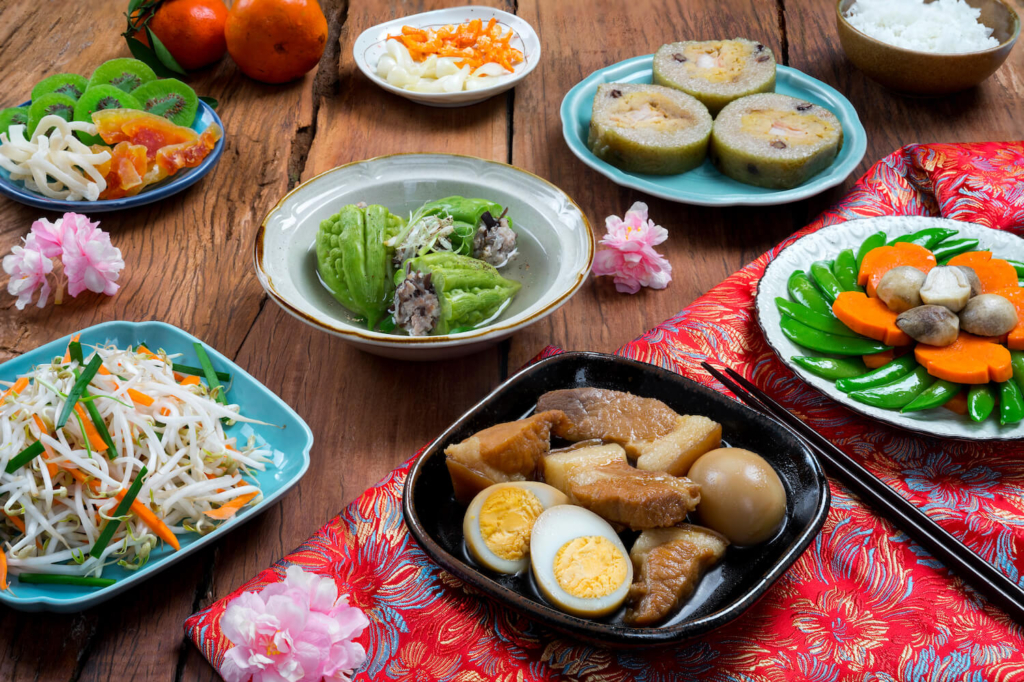
Tet cuisine is rich, symbolic and prepared days in advance — every dish carries meaning of prosperity, longevity or family wholeness.
- Bánh chưng / Bánh tét — the cornerstone of Tet. Square (chưng, northern) or cylindrical (tét, southern) sticky-rice cakes wrapped in banana leaves, filled with mung bean and pork belly, slow-boiled overnight. Symbolises earth, ancestry and family abundance.
- Thịt kho hột vịt — caramelised pork belly braised with duck eggs in coconut water. A southern Tet staple eaten across the three days. Best paired with pickled mustard greens (dưa cải chua).
- Canh khổ qua nhồi thịt — bitter melon stuffed with minced pork. The name khổ qua literally means "bitterness passing" — eaten in hope that the hardships of the old year depart with the gourd.
- Mứt Tết — sugared candied fruits and seeds (coconut, ginger, lotus seed, kumquat) served to guests with hot jasmine tea.
- Xôi gấc — vivid red sticky rice from gấc fruit, served on the family altar and at celebratory meals for its auspicious colour.
To experience traditional Vietnamese cuisine at its source, the heritage venue Cục Gạch Quán traditional Vietnamese serves a refined Tet menu by reservation. For a broader F&B map, our Thảo Điền dining guide covers contemporary venues that remain open through the holiday, and our exploration of Saigon café culture highlights independent spots that welcome quiet morning visitors during the slower Tet days.
Cultural etiquette: what to wear, what to avoid
Wear: Red, yellow, or warm tones bring good fortune. Avoid black or all-white outfits on mùng 1 — these colours carry mourning associations. Smart-casual is perfect; conservative dress (shoulders and knees covered) is essential for pagoda visits.
Avoid on mùng 1:
- Sweeping or cleaning indoors (you'll sweep away good fortune)
- Breaking glass or ceramics (signals discord)
- Crying, arguing, or speaking of death or illness
- Asking for change or money lending
Welcome rituals tourists can join:
- Wishing locals Chúc Mừng Năm Mới ("Happy New Year") or An Khang Thịnh Vượng ("Peace, health, prosperity")
- Accepting lucky red envelopes (lì xì) graciously if offered; with both hands and a smile
- Visiting pagodas and tying a red wish-paper to the wish tree
Practical tips for tourists during Tet
- Banks and ATMs: Bank branches close from Tet Eve to mùng 4. ATMs operate but may run out of cash by mùng 2 — withdraw VND for the holiday period two days ahead.
- Transport: Grab and Be ride-hailing services run with reduced supply and elevated surge pricing (~1.5x to 2x normal). Pre-book airport transfers a week ahead. For arrival logistics see our Tân Sơn Nhất airport transfer to District 1 guide.
- Shopping: Vincom, Saigon Centre, Takashimaya and Diamond Plaza remain open with reduced hours. Local markets close from mùng 1 to mùng 3; some reopen earlier.
- Embassies and government offices: Closed for the full national holiday. Plan around this if you require consular services.
- Pharmacies: Major chains (Pharmacity, Long Châu) remain open at reduced hours. Carry any prescription medication you need.
- Cash etiquette: Carry crisp, new bills in small denominations if you wish to give lì xì — old or wrinkled notes are considered inauspicious.
For first-time visitors, our Vietnam travel guidebook 2026 offers wider context on country-level travel essentials, from visa rules to seasonal weather.
Why book your Tet 2027 stay at The Myst Dong Khoi
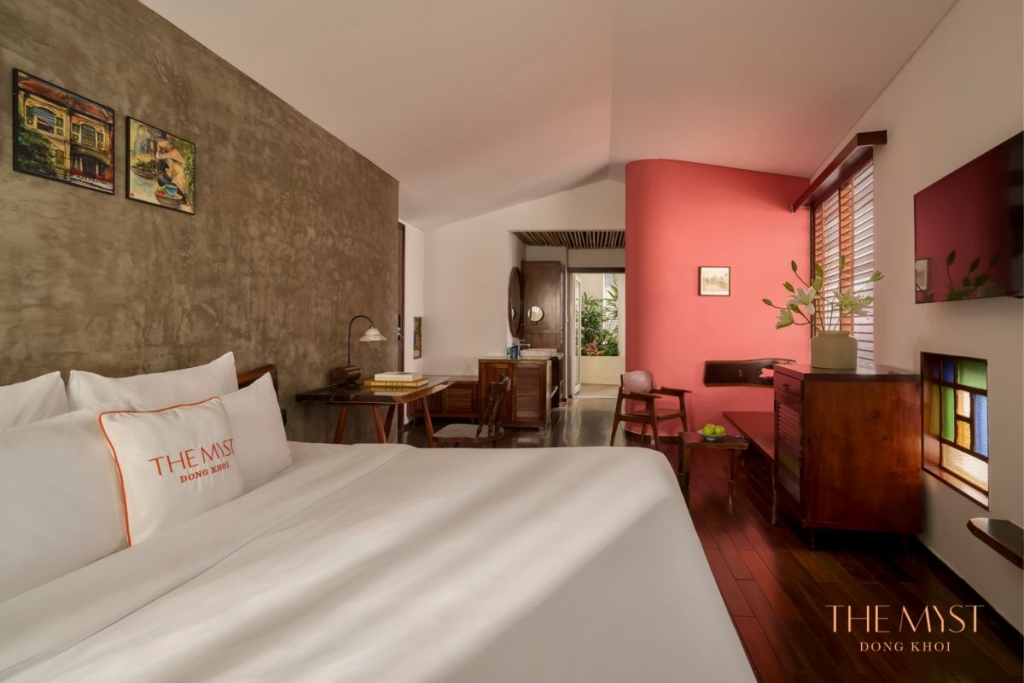
The Myst Dong Khoi remains fully operational throughout Tet 2027, with all amenities — restaurant, bar, spa, and 24-hour concierge — open every day of the holiday. Our 108 boutique rooms are dressed with traditional Tết décor: golden apricot branches in the lobby, calligraphy scrolls bearing blessings of fortune, and lì xì envelopes offered to every guest on mùng 1.
Our location at the quiet end of Hồ Huấn Nghiệp Street places you four minutes' walk from the Nguyễn Huệ Flower Street and within five minutes of the Saigon River fireworks vantage at Bến Bạch Đằng. As a Michelin Guide Hotels & Stays inducted boutique — and the 2025 World Luxury Hotel Awards Global Winner for Luxury Cultural Hotel — we are positioned to make your Tết visit both seamless and meaningful.
Frequently Asked Questions
When exactly is Tet 2027 and how long does it last?
Is Tet a good time for tourists to visit Saigon?
What's open in Saigon during Tet — restaurants, attractions?
What are the must-try traditional Tet foods?
Can foreign visitors join Tet celebrations?
How early should I book a Tet 2027 hotel in Saigon?
Should I give lucky money (lì xì) — etiquette for tourists?
Is the Saigon River fireworks show on Tet 2027 free for tourists?
Welcome the Year of the Goat with us
Stay at The Myst Đồng Khởi during Tet 2027 — five minutes from the Nguyễn Huệ Flower Street, four minutes from the Saigon River fireworks vantage, and surrounded by the quietest, most photogenic heritage corner of District 1. Our concierge speaks fluent English and will arrange flower-street walks, pagoda visits, calligraphy sessions, and private dining tailored to your travel rhythm.
→ Explore our rooms and Tết stay packages
→ Book direct for our best Tết 2027 rates
Crafted by Silverland Hotels.
Blog
Tucked into a quiet stretch of Hồ Huấn Nghiệp Street in District 1, The Myst Dong Khoi has become one of the few independent boutique hotels in Ho Chi Minh City to earn a place in the Michelin Guide Hotels & Stays. The recognition arrives quietly — there is no champagne fanfare, only a single line on the guide.michelin.com listing — yet it confirms what guests have been telling us since 2017: that small details, considered design and warm Vietnamese hospitality matter more than chain-scale amenities. For travellers searching the Michelin Guide for an authentic Saigon stay, this page explains what the recognition means, and what awaits at our heritage tower by the river.
What the Michelin Guide Says About The Myst Dong Khoi
The Michelin Guide editors' description of our hotel is brief, factual and observant — three qualities we have always tried to embody. Their published listing reads:
The Myst Dong Khoi cuts an impressive figure in Ho Chi Minh City's District 1. Standing at the banks of the Sông Sài Gòn, this luxury hotel is a modernist tower whose windows and balconies stud the facade in an unusual pattern, while bursting forth with leafy plants.
The interiors are richly decorated with objets d'art, hardwood flooring, stained glass and wrought-iron accents in rooms inspired by local homes, the finest of which feature serene balconies for taking in the buzz of Saigon below.
There's a gym, a spa, and a rooftop swimming pool, as well as a coffeehouse, a bar, and the Nest, the Myst Dong Khoi's locally inspired restaurant.
— Source: Michelin Guide Hotels & Stays
Why a Michelin Guide Listing Matters for a Saigon Boutique Hotel
The Michelin Guide Hotels & Stays programme expanded into Southeast Asia gradually, with Vietnam joining its global directory only recently. Inclusion is curatorial rather than competitive — properties are selected by Michelin's anonymous editors based on character, design, location and the quality of guest experience. There are no scores, no badges to chase. A hotel is either in the guide, or it isn't.
For a 108-room independent boutique in District 1 — surrounded by international chain towers — making the list is meaningful for a particular reason: it signals that Michelin's editors saw the same thing our team works to protect every day. The unhurried rhythm. The art on the corridor walls. The Saigon-Chợ Lớn-Gia Định inspired interiors. The view of the river from the rooftop pool. None of these are advertised; they are simply present.
A Walk Through The Myst Dong Khoi — Heritage Tower by the Saigon River
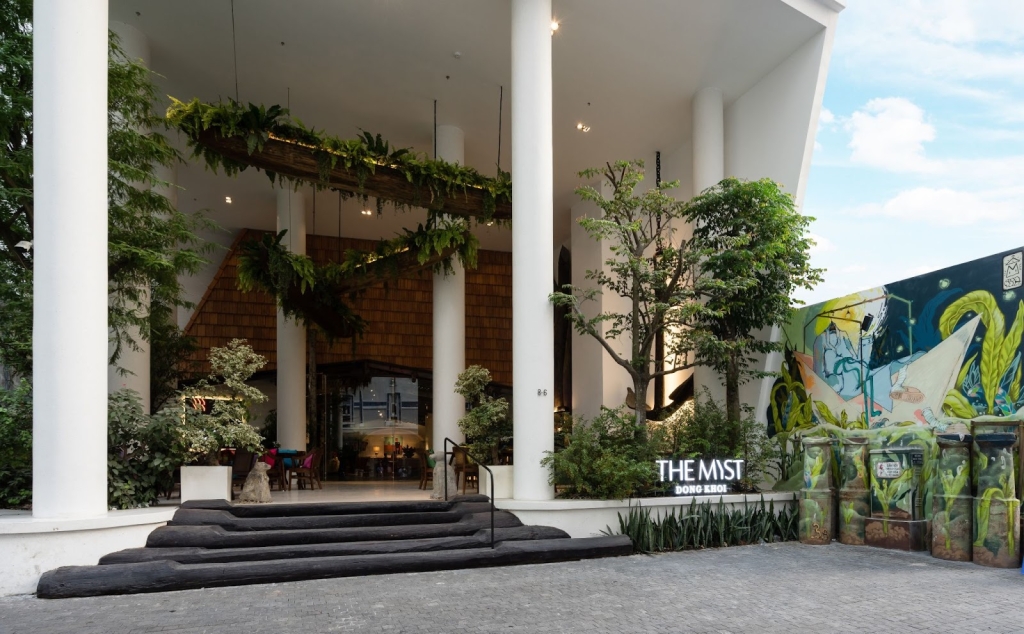
Our building was conceived by Vietnamese architect Nguyễn Hoà Hiệp, whose work has earned international design recognition for translating local vernacular into contemporary form. The façade — those windows and balconies that Michelin's editors noted "stud the facade in an unusual pattern" — was inspired by the irregular geometry of Saigon's old alleyway houses (hẻm). Inside, the lobby reveals a more direct heritage gesture: salvaged Marseille roof tiles, wrought-iron beams and a five-tonne ship's anchor recovered from the former Bason shipyard, which once stood a kilometre downriver before being dismantled in late 2015.
The result is a building that reads as quiet on the outside and layered on the inside. Guests who walk the corridors slowly tend to notice things — the abacus on a bathroom door, the Champa arch over a sofa, the patterned terrazzo on a stair landing. Nothing demands attention. Everything rewards it.
Rooms Inspired by Local Homes
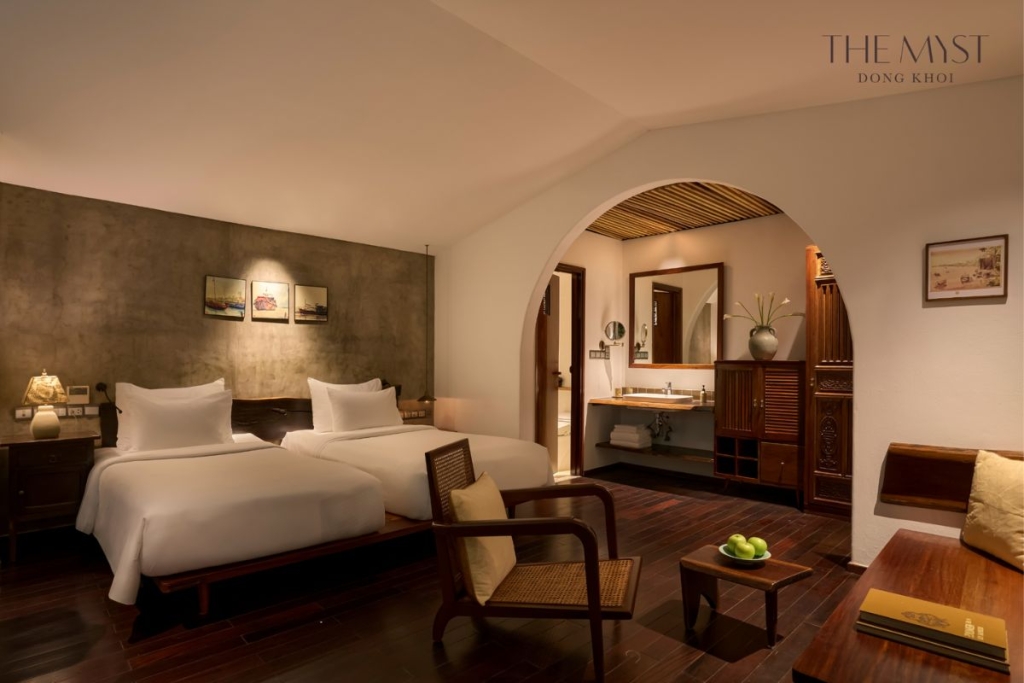
The Myst Dong Khoi has 108 rooms across six categories, ranging from the 40 m² Dong Khoi Balcony Room (from USD 150 per night) up to the 70 m² Myst Suite (from USD 350 per night). Each room features a private balcony, a deep-stone bathtub set against the window, hardwood flooring and locally sourced art. The signature touch is the Saigon Minibar — a small refrigerator stocked with herbal teas, sugarcane juice, coconut water and other drinks rarely found outside Vietnam, complimentary to all guests.
The most-booked categories tell their own story. Our Verdant Calm Balcony and Dong Khoi Balcony rooms together account for more than a third of all stays, suggesting that guests come looking for the same balance Michelin's editors observed: serenity above the buzz, with the city always within reach. The two Suite categories — Saigon Signature and The Myst Suite — extend the same idea with corner-window views and longer balconies overlooking the river or Đồng Khởi Street.
→ View all six room categories
The Nest, Bason Café and ROOTY Bar — Dining the Michelin Editors Noted
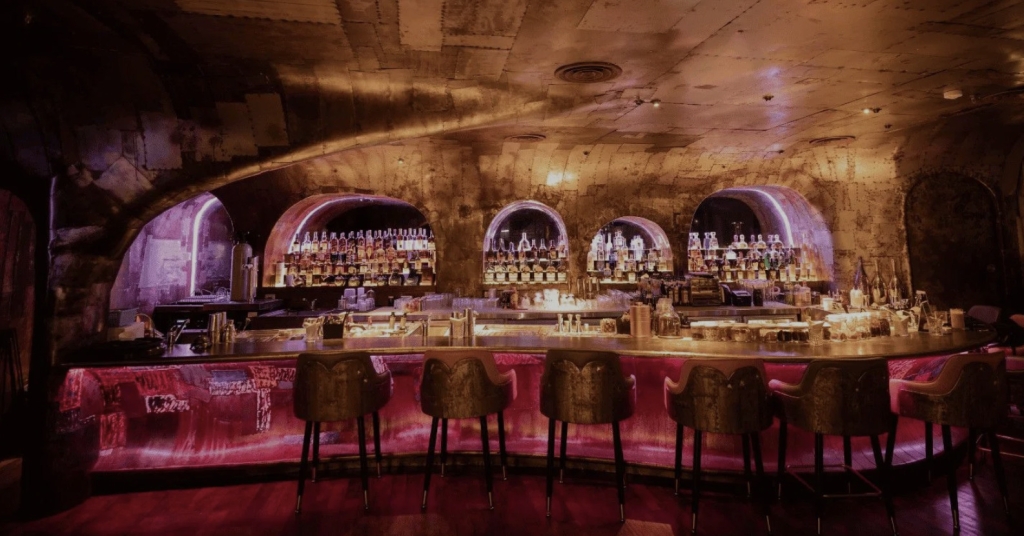
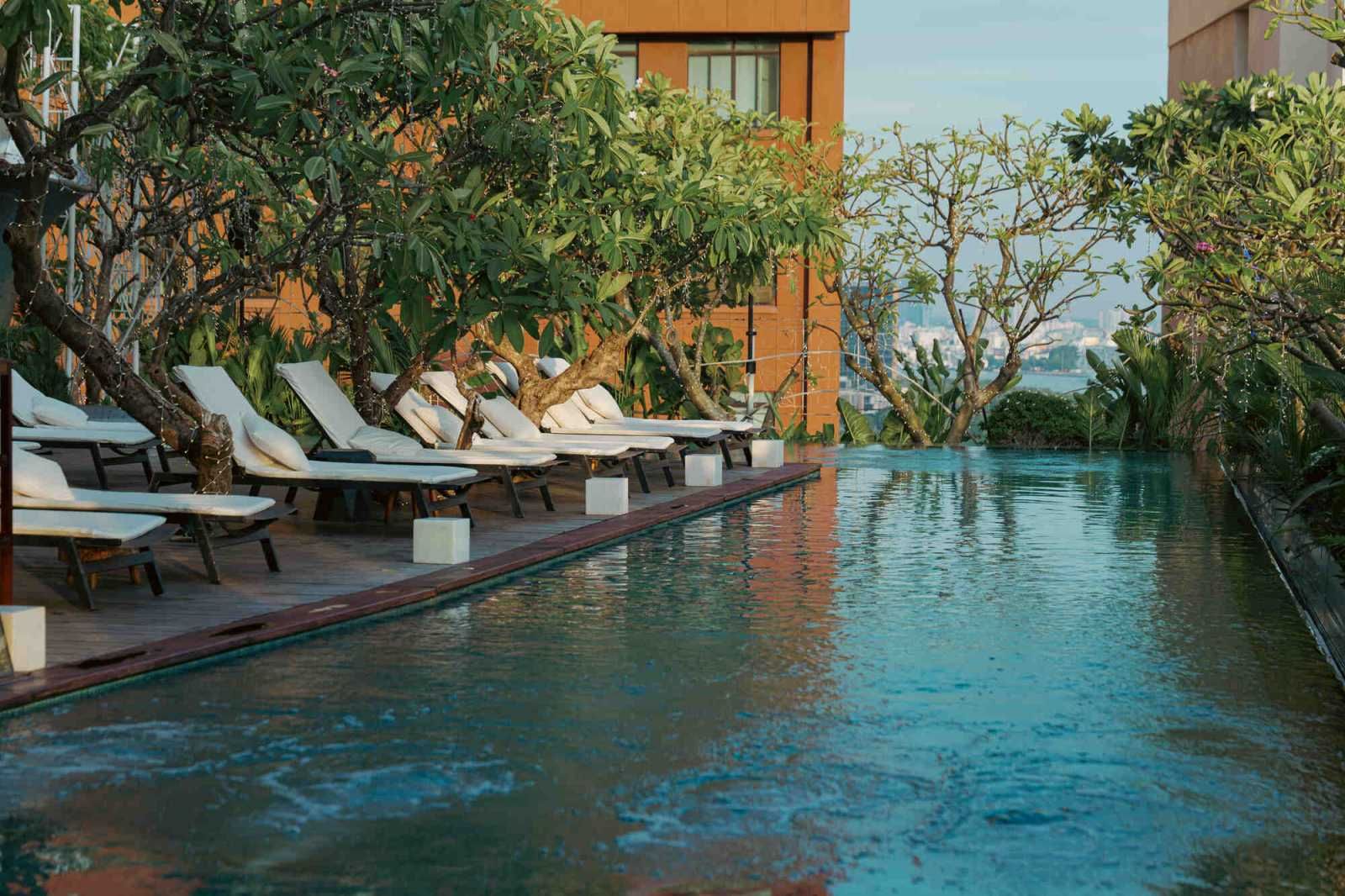
Michelin's description ends with a quick survey of our food and drink spaces, and each carries a different kind of memory of Saigon. The Nest, on the 12th floor, serves Local Fusion and Western cuisine with a 45-label wine list, set within a glass-walled garden room that overlooks the Saigon River. Bason Café on the ground floor takes its name and its anchor motif from the demolished shipyard outside our front door; its Vietnamese drip coffee is among the strongest in District 1. ROOTY Bar on the 15th floor opens onto a 24-metre infinity pool — the cocktails are Saigon-inspired, the sunset is included.
Honoured Twice in 2025 — Michelin Guide and World Luxury Hotel Awards
The Michelin Guide listing arrived alongside another recognition: in 2025 The Myst Dong Khoi was named Global Winner — Luxury Cultural Hotel at the World Luxury Hotel Awards, and Country Winner (Vietnam) — Luxury Art Boutique Hotel. The pairing matters to us because the two organisations look at different things — Michelin editors observe the property as travellers do; the World Luxury Hotel Awards are voted on by guests who have stayed. Earning recognition from both, in the same year, suggests we are getting the small things right.
Read more from Silverland Hospitality: Inside the Michelin Guide Hotel in Saigon.
Plan Your Stay at The Myst Dong Khoi
If you are visiting Saigon — for the first time or the fifteenth — we would be glad to welcome you. Direct reservations through our website include our best available rate, a complimentary welcome drink (try the nước shiso), and free airport pick-up for stays of three nights or more. Our reservations team is available by phone or email; for tailored stays we recommend reaching out directly.
→ Discover our rooms and packages
→ Reserve direct for our best rate
Frequently Asked Questions
Is The Myst Dong Khoi listed in the Michelin Guide?
What kind of hotel is The Myst Dong Khoi?
How far is The Myst Dong Khoi from Notre Dame Cathedral and Ben Thanh Market?
What are the room rates at The Myst Dong Khoi?
Does The Myst Dong Khoi have a Michelin-rated restaurant?
How do I book a stay at The Myst Dong Khoi?
Recognition matters less than what guests carry home — a slower morning by the river, a quiet chess game with the concierge, the nước shiso welcome that turned a long flight into a soft landing. The Michelin Guide is, for us, a small affirmation that these small things are seen. We hope you will come and find yours.
Crafted by Silverland Hotels.
Blog
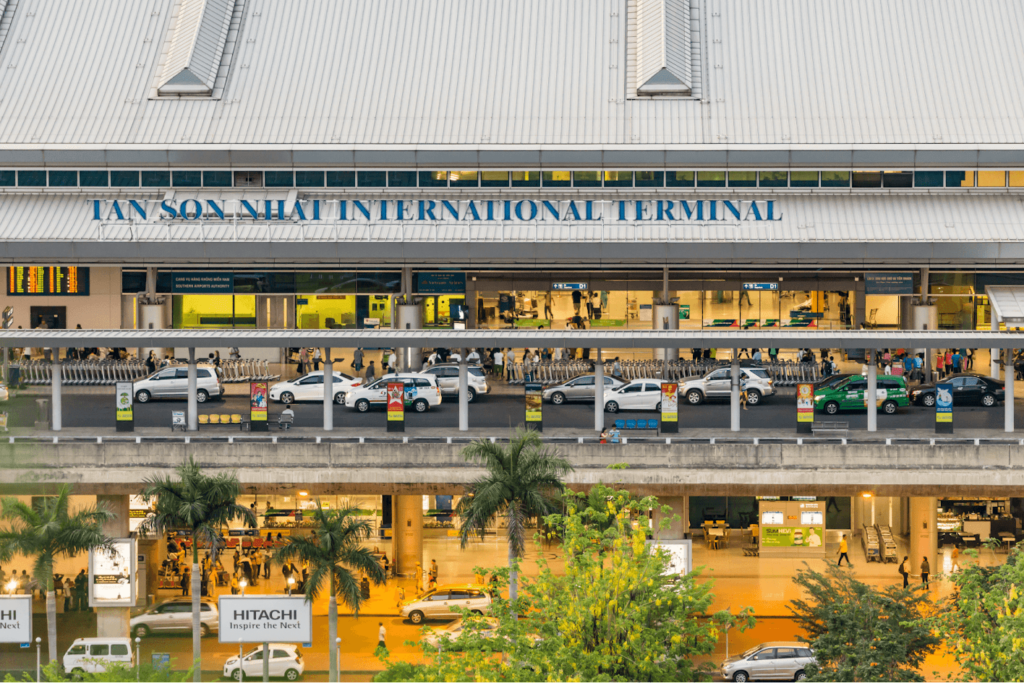
If you are planning a trip to Ho Chi Minh City – whether it is for your first time exploring, for business, for leisure or for a romantic getaway- choosing the right means of transportation from the airport to District 1 is the first step to a smooth and enjoyable stay.
With a distance of only 6-9 km, this route is not considered too far, but factors like traffic density, time, and the means you choose will determine how quickly you can get to the city. The article below will be a comprehensive guide on transportation options from Tan Son Nhat Airport to District 1, from luxury to economical options, along with useful tips and practical information to make your journey in Saigon easier.
5 way to get from Ho Chi Minh Airport to District 1
Why Choose District 1?
District 1 is the cultural and commercial hub of Ho Chi Minh City. It’s home to many of the city’s iconic landmarks, French colonial architecture, luxury shopping streets, fine dining restaurants, and of course, elegant boutique hotels like The Myst Đồng Khởi. Whether you’re staying for a few nights or a longer visit, District 1 is where you’ll feel the city’s vibrant energy, rich history, and undeniable charm.
Just a few steps away, you can reach Nguyen Hue walking street, City Theater, Ben Thanh market, or Bach Dang wharf - destinations not to be missed in Saigon.
Quick Overview: Airport to City Centre
| Mode of Transport | Travel Time (Avg.) | Estimated Cost | Best For |
|---|---|---|---|
| Hotel private transfer | 30–45 mins | Free – $25 USD | Luxury, comfort, first-time visitors |
| Ride-hailing apps (Grab/Be) | 30–50 mins | $6–10 USD | Convenience, cashless travel |
| Metered taxi (Vinasun/Mai Linh) | 30–60 mins | $7–11 USD | Quick access, no apps needed |
| Airport shuttle bus #109 | 40–60 mins | $0.80 – $1 USD | Budget travelers, solo visitors |
| Public bus #152 | 50–70 mins | $0.30 – $0.40 USD | Super budget, light luggage only |
Option 1: Private car from hotel – 5-star experience with The Myst Dong Khoi
If you want to start your day off right and conveniently, then a private airport transfer from The Myst Dong Khoi is the ideal option. As one of the leading 5-star boutique hotels in District 1, The Myst Dong Khoi offers an airport transfer service that reflects the hotel’s signature attention to detail.
Reasons to choose hotel shuttle:
- No waiting after a long flight
- Personalised service – staff holding a welcome sign with your name at the arrivals hall
- Door-to-door luggage assistance
- Direct transfer to the hotel lobby – no queuing or waiting.
How to Book:
- Add pickup when booking directly on the official website
- Or contact the hotel via email, WhatsApp, or Facebook Messenger before arrival
✨ Tip: Guests booking suites or special packages may enjoy complimentary round-trip airport transfers.
Option 2: Grab, Be, or Xanh SM – Flexible, easy to use
Apps like Grab, Be and Xanh SM are top choices for tech-savvy travelers. With intuitive interfaces, these platforms allow you to book a car or motorbike with just a few taps.
How It Works:
- Download the Grab, Be or Xanh SM app before your flight
- Use airport Wi-Fi or a local SIM card to book
- Choose pickup point (usually Column 18 for Domestic Terminal or Column 12 for International Terminal)
- Select your vehicle type (car or motorbike)
- Pay with card (in the app) or cash
Advantages:
- Transparent pricing
- Avoids haggling
- Clean, air-conditioned vehicles (especially GrabCar Plus or BePremium)
Estimated Fare:
- 150,000 – 250,000 VND (~$6–10 USD)
- Travel time: 30–50 minutes
Note at the airport: Drivers are not allowed to wait right in front of the terminal. You will meet them at the pick-up lanes clearly designated in the app
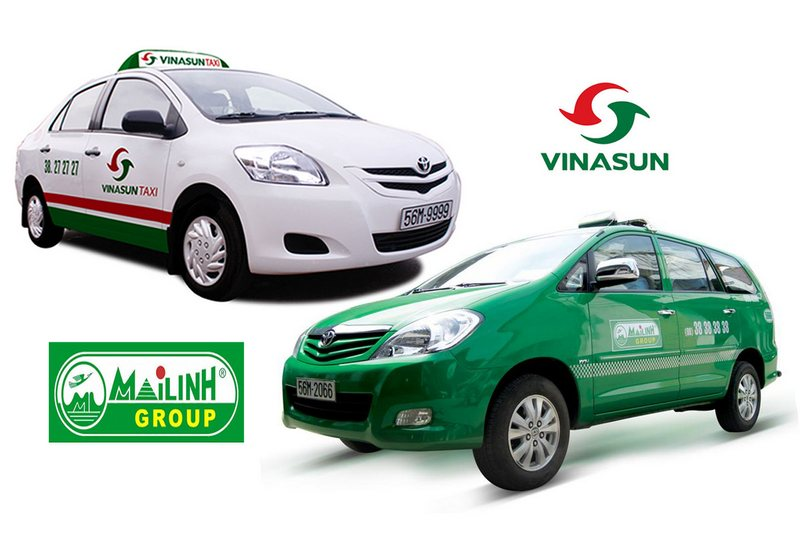
Option 3: Traditional Taxi – Vinasun or Mai Linh
- You can find many taxis parked right at the airport exit.
- Prioritize two reputable companies:
- Vinasun (white car with red and green stripes).
- Mai Linh (green car)
Fares & Duration:
- 180,000 – 250,000 VND (~$7–11 USD)
- 30–60 minutes depending on traffic
Avoid unlicensed taxis or unofficial drivers in the terminal. Politely decline the offers and go straight to the official taxi queue with uniformed staff.
Safety Tip:
Always make sure the meter is turned on before the car starts moving. If the driver refuses, choose another car.
Option 4: Airport Bus #109 – Budget Friendly & Clean
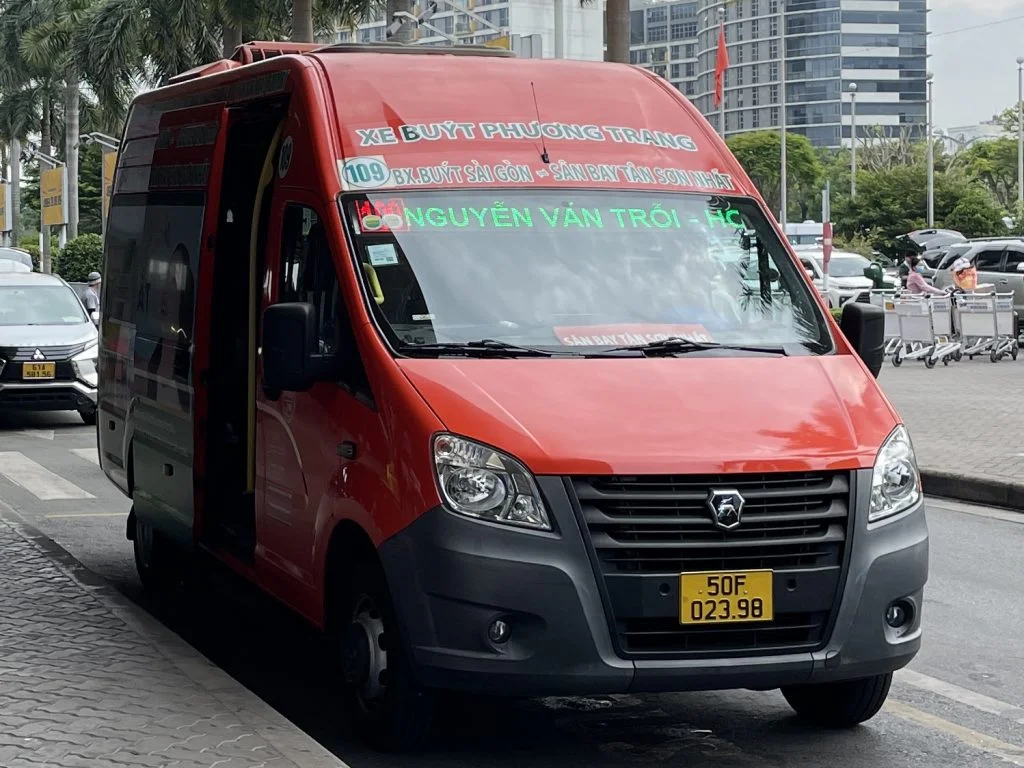
If you are traveling light and want to save money, airport bus #109 is a reliable, clean and economical option to get to District 1.
Details:
- Frequency: 15–20 minutes/trip.
- Operating hours: 5:30 AM – 1:00 AM the next day.
- Ticket price: 20,000 VND (~$0.80 USD).
- Stops near Ben Thanh Market and Pham Ngu Lao Western Quarter, 23/9 Park
- Pickup location: Column 18 (Domestic Terminal) or Column 12 (International Terminal)
- Look for the bright yellow bus says "Airport Shuttle Bus 109"
- Look for the bright yellow bus says "Airport Shuttle Bus 109"
Note: Luggage space is limited. This option is best for solo travelers with backpacks or small suitcases.
Option 5: Public Bus #152 – Cheapest Route to the City Center
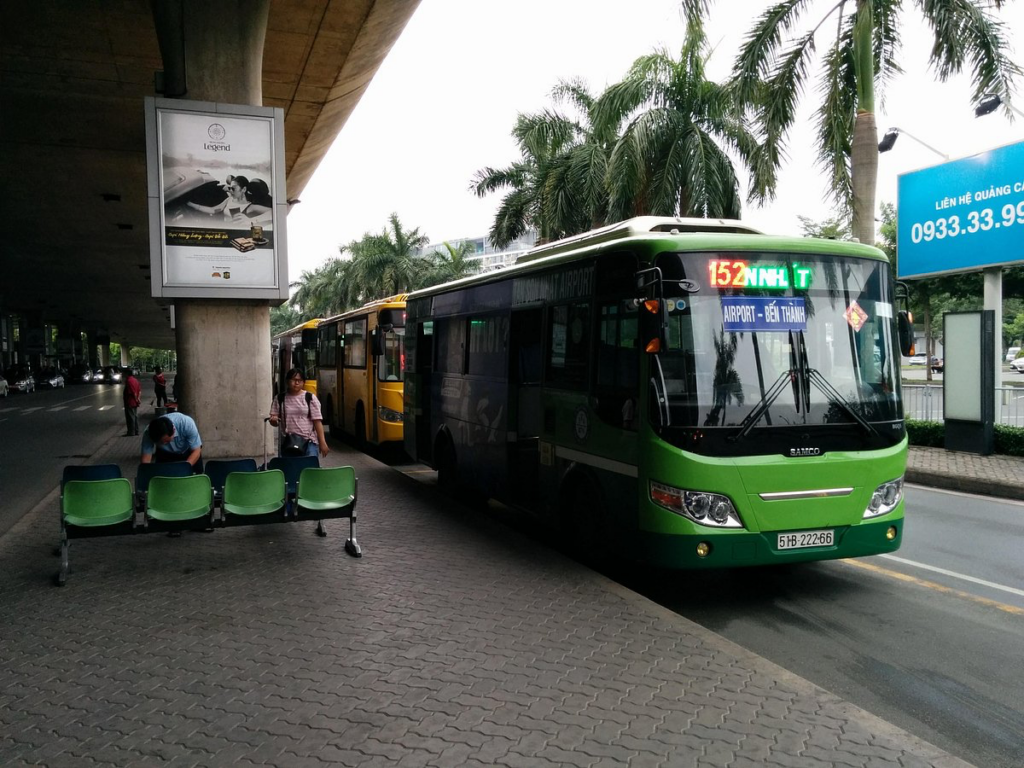
Bus 152 is suitable for those who want to save maximum and have experience taking buses in Vietnam; popular with locals and students
- Ticket price: 6,000 VND + 6,000 VND per suitcase (~$0.50 USD total).
- Operating hours: 5:15 AM – 7:00 PM.
- Stops along Nam Ky Khoi Nghia, Ben Thanh and Pham Ngu Lao streets.
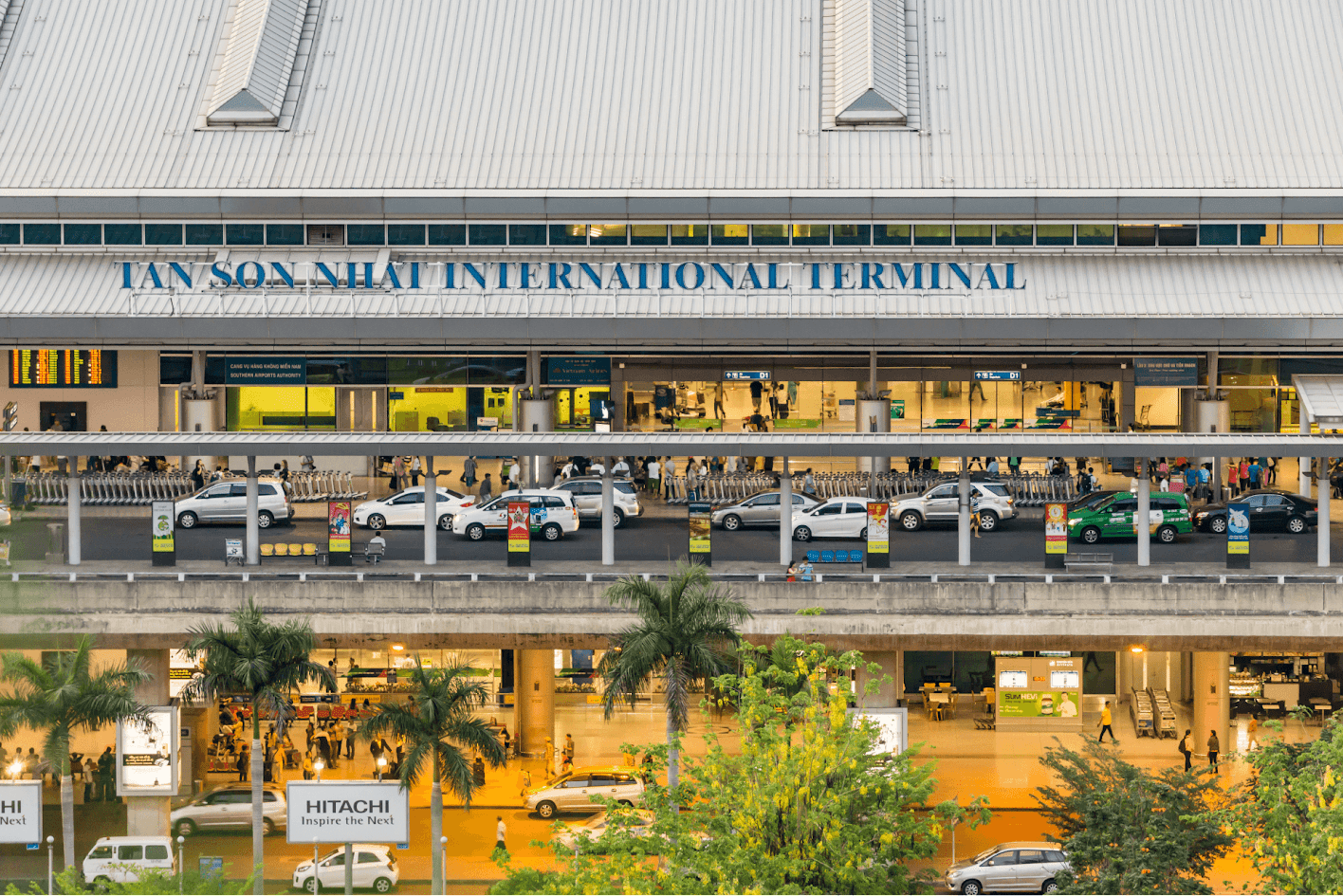
- How to find the bus: Exit the terminal and walk past Burger King (International Terminal) or turn right after the car lane (Domestic Terminal) to look for the blue bus sign.
Note: Staff does not speak English, the ride is longer, bumpier and less air-conditioned. Best suited for adventurous travelers on a budget.
Tips to Prepare for the Ride
- Buy 4G SIM (Viettel, MobiFone, Vinaphone at the airport or use eSIM in advance) - Prices start at 150,000 VND (~$6 USD)
- Have some cash ready (some drivers won't accept cards)
- Write down your hotel address in Vietnamese to give to the driver.
- Avoid rush hour: Travel before 7:30 AM or after 7:30 PM for the fastest journey.
- Pack light – especially if you're using a bus or motorbike taxi.
Where to Stay After Landing: The Myst Đồng Khởi – Tranquility in the Heart of Saigon
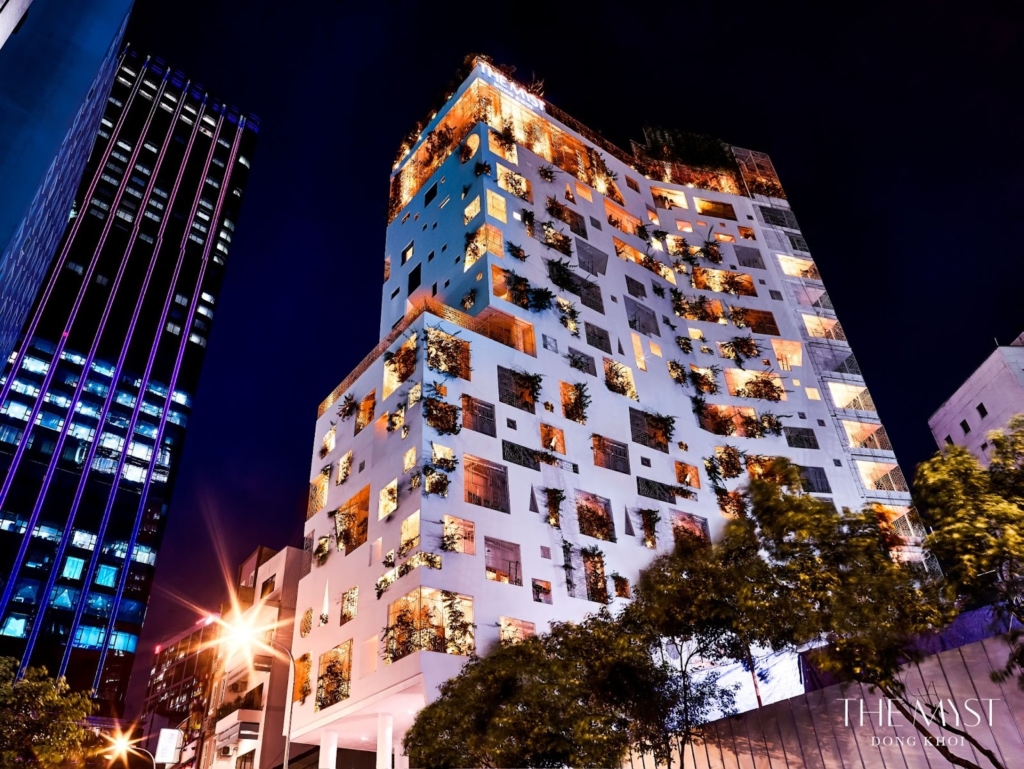
After moving from the airport, The Myst Dong Khoi welcomes you with a relaxing space, imbued with the breath of Saigon heritage. Nestled on Ho Huan Nghiep Street, just a few steps from Nguyen Hue walking street, The Myst Dong Khoi opens up a sophisticated and private resort space - where you feel the breath of an old Saigon in every detail.
Why The Myst is So Unique:
- Artistic design with heritage imprint: Each room is a carefully selected space Carefully selected, displaying old Saigon artifacts and soft organic materials.
- • Rooftop Pool & City View Bar: Enjoy signature cocktails and watch the sunset over the Saigon River at Rooty Bar.
- Afternoon Tea & Cultural Rituals: Complimentary afternoon tea, a fully stocked minibar, and even goodnight cookies with a short story.
- Elegant tranquility: Wooden bathtubs, private balconies and attentive housekeeping make for a memorable stay.
- Free airport transfers: Book directly through The Myst's website to enjoy free airport transfers, depending on your room type or package.
Final Thoughts: From the Sky to Saigon’s Side Streets
Getting from Ho Chi Minh Airrport to District 1 can be easy and comfortable if you choose the right means of transport. And once you arrive in the center, let your vacation begin at the place of memories and emotions – The Myst Dong Khoi, where you not only stay, but also feel a very unique Saigon.
Book a room at The Myst Dong Khoi today to enjoy complimentary airport transfers, afternoon tea and authentic Saigon hospitality at one of Vietnam's finest boutique hotels.
Blog
Discover how safe Ho Chi Minh City (Saigon) really is for travellers in 2026, from crime and scams to health tips and cultural etiquette… Here's everything you need to stay safe and enjoy Vietnam’s most vibrant & dynamic metropolitan.
Saigon travel safety tips - 8 things you should know
A city of contrast and charm
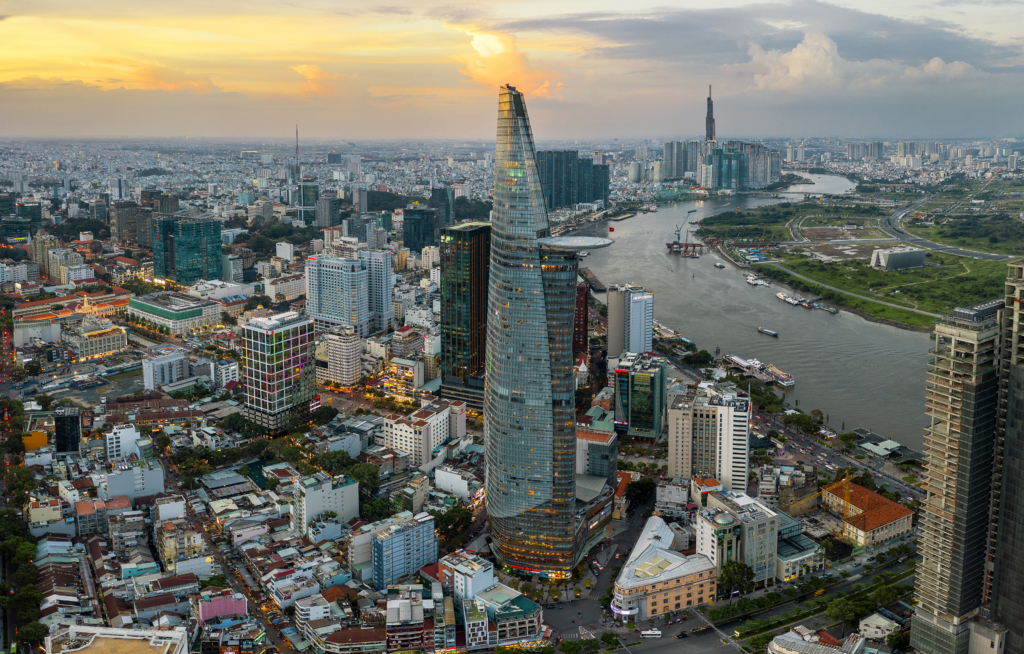
Ho Chi Minh City, which is also known to locals as Saigon, is a riot of colour, energy and sound. Motorbikes whizz past colonial boulevards, the smell of street-food mingles with the buzz of modern cafés, and a thousand stories unfold in every corner.
But amid the chaos, many first-time visitors wonder “Is Ho Chi Minh City safe to visit in 2026?” The answer from governments, travel experts, and locals is a reassuring “YES”, with a few caveats.
Overall safety - Reassuring but street-smart
Smartraveller advisory classifies Vietnam under “Exercise normal safety precautions” the same rating given to much of Europe, whereas the Vietnam Tourism Board calls it “one of the safest countries in the world for travellers.” Meanwhile, Berkshire Hathaway Travel Protection (BHTP) has listed Vietnam among the Top Ten safest destinations for 2026. So the baseline is good. Still, no city is risk-free and Ho Chi Minh City’s dangers tend to be the familiar ones of big-city life like pickpockets, traffic, and occasional scams.
Petty crime in Ho Chi Minh City
Incidents of serious crime are rare, but petty theft does occur. Snatch-and-grab thefts by motorbike are the most common. Markets like Ben Thanh in downtown, Binh Tay in Chinatown or busy night streets such as Bui Vien, Nguyen Hue pedestrian boulevard can be tempting targets for quick-handed thieves. Thus, stay safe is important, here are the tips:
- Carry bags cross-body and on the side away from traffic.
- Keep phones and cameras secure when taking photos near the street.
- Avoid carrying large amounts of cash or wearing expensive jewellery.
- Store passports and valuables in your hotel safe.
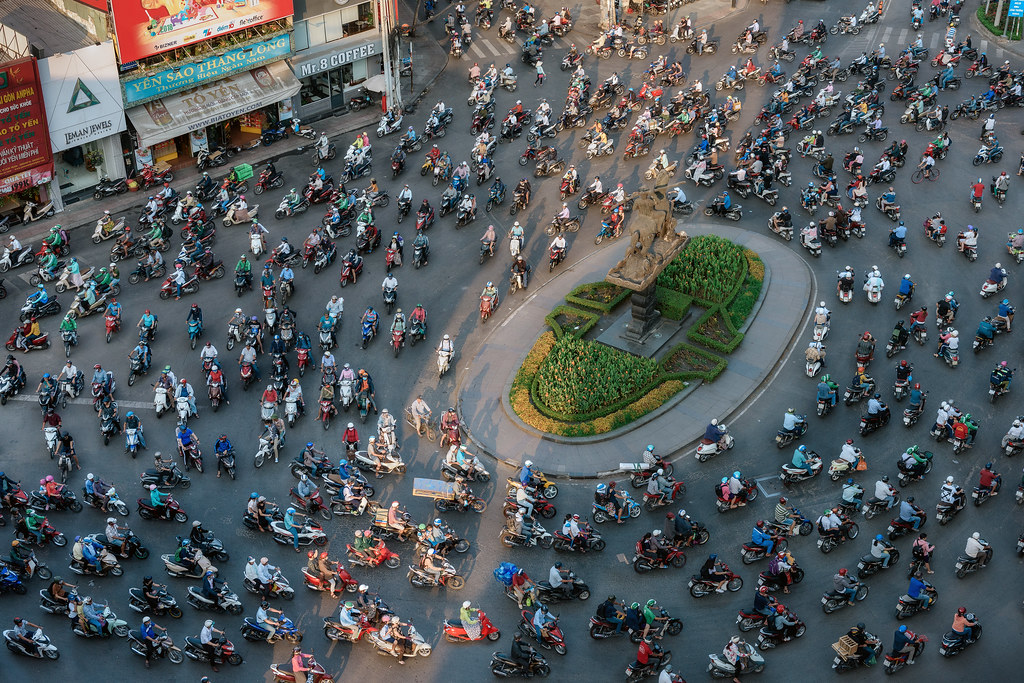
Traffic challenge is a beautiful organised chaos
Saigon’s streets are famous for their seemingly lawless flow of motorbikes. BHTP describes it as “chaotic to Western eyes”. Cars and motorbikes may come from everywhere, the roads are packed from dust till dawn, it is difficult to find the crossings for pedestrians, and even if you can find one, traffic may not even stop for you to walk through. It sounds scary, doesn't it? But here are our important tips for safer mobility:
- Use licensed taxis like Vinasun (white car, green logo) or Mai Linh (a very obvious green car), still remember to confirm the meter is running before the ride starts.
- Master the hailing apps like Grab or Be (similar to Uber or Lyft) which would identify clearly how much you have to pay for the ride.
- Cross streets slowly and predictably because drivers will navigate amazingly around you. Pedestrians may find crossing streets an adventure — but a calm, steady pace is the key to safety.
- Seriously avoid renting and riding a motorbike unless you have experience and a valid international driving license.
Scams and over-charging
Vietnamese hospitality is legendary, but a handful of scammers target unsuspecting visitors. Common schemes include rigged taxi meters, inflated restaurant bills, and “friendly” locals offering services like shoe shining, fruit stalls, fresh coconut… at sky-high prices. And so to avoid unnecessary troubles, we would suggest you to:
- Book rides via hailing apps or ask your hotel Front Office to call a taxi.
- Always ask the price before ordering or buying.
- Use ATMs inside banks or shopping centres to avoid card skimming.
- Politely decline unsolicited offers for tours or “help” with currency exchange. A simple “Không, cảm ơn” (“No, thank you”) will usually end the conversation.

Health & Hygiene: Simple Precautions, Big Difference
Ho Chi Minh City boasts excellent private clinics and hospitals, but basic health habits remain your best protection. According to the Vietnam Tourism Board website “It’s wise to bring sunscreen, insect repellent, and a small medical kit. Avoid tap water and eat at busy food stalls where turnover is high’. More over, you should also be mindful in below acts:
- Use bottled water and avoid ice in street drinks if unsure.
- Apply repellent to protect against mosquito-borne illnesses.
- Have travel insurance that covers medical evacuation.
- During high pollution days, consider wearing a mask outdoors.
- From June to November, Saigon experiences the rainy season. During this time, you may expect short, intense downpours and occasional street flooding. Also, keep an umbrella handy and avoid riding motorbikes during heavy rain.
Laws & Cultural Etiquette
Vietnam’s laws are strict and ignorance is no defence. Drug offences carry severe penalties, including the death sentence. It’s also illegal to photograph military facilities or engage in political protests. Besides, here are some tips on cultural do’s and don’ts:
- Dress modestly in temples and religious sites.
- Remove shoes before entering someone’s home.
- Avoid public displays of affection.
- Be polite. Vietnamese people appreciate soft tones and respectful gestures.
Behind the traffic and the noise lies a city of remarkable kindness, where locals help visitors cross the street and a smile is often the best safety net.
Ho Chi Minh City is no more dangerous than other big cities in the region. It is arguably friendlier though the biggest risks are minor and avoidable.Come prepared, stay alert, and you’ll discover a city that feels alive in every sense: from the noisy streets to the quiet colonial lanes as well as rich historical destinations in town.
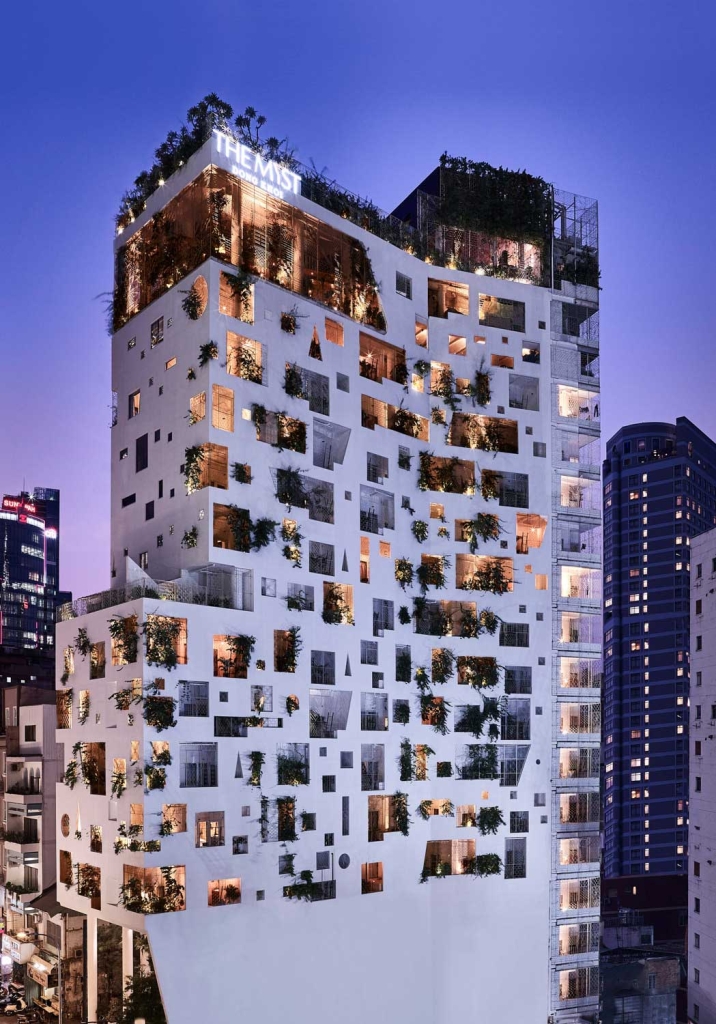
Where to Stay Safely in Ho Chi Minh City
For peace of mind and comfort, choose centrally located hotels in either Ben Thanh ward or Ben Nghe ward, which are close to major attractions and with reliable security. In case, you seek a boutique luxury experience, you might consider:
- The Myst Dong Khoi Hotel - a romantic 5-star haven evoking Saigon’s heritage with modern elegance.
- A chain of Silverland Hospitality hotels - the 4-star properties blending Vietnamese hospitality, top notched design and international comfort.
Both offer central locations, 24-hour security and personalized service, ideal bases for exploring the city safely. Moreover, book directly on the websites for always’ best prices and benefits like free airport pick-up, early check-in, late check-out and so on.
Blog
For too long, Vietnam was considered a bucket-list destination purely for its dramatic karst landscapes, chaotic-yet-charming streets, and world-class pho. Today, something far more compelling is driving its popularity: Safety.
The narrative has shifted. Vietnam isn't just a beautiful place to visit; it’s one of the most stable and secure destinations on the planet. This isn't just traveler hearsay; it's a fact confirmed by the most rigorous international metrics.
If you’re planning your next adventure, especially if you’re an American citizen or a solo traveler prioritizing peace of mind, here is the comprehensive, data-backed guide on why Vietnam should be at the top of your list.
Is Vietnam Safe: Essential Facts
U.S. Government & Global Endorsements
When assessing a country’s security, the most important data point comes from official government advisories. Vietnam consistently achieves the highest possible rating for stability and safety from the U.S. Department of State. From US Travel Advisory, Vietnam's safety ranked Level 1 – Exercise Normal Precautions.
This is the gold standard, it means the safety and security risks of the country are minimal and comparable to those that travellers would encounter in any major city in the world. The advisory has been periodically reviewed and reissued without changes, underscoring consistent political stability and a low-threat environment. In which, Level 1 rating assures travelers that there is no systemic threat that should make them reconsider travel.
Google Destination Insights Confirms Demand
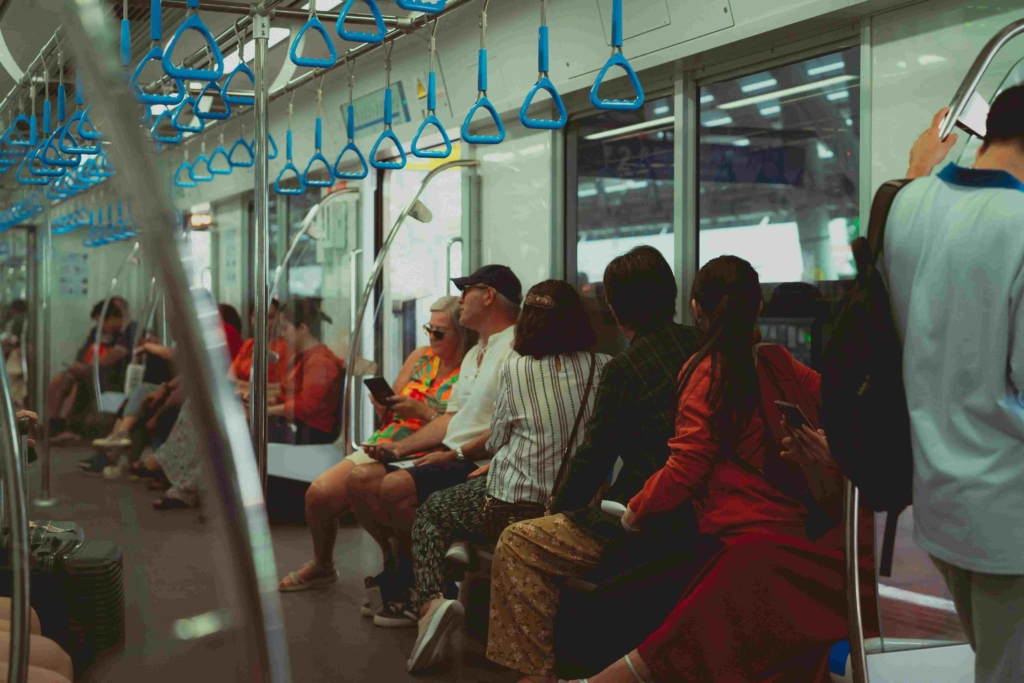
The Data Doesn't Lie, in fact, travelers around the world vote with their mouse clicks. Google Destination Insights (GDI), Google's real-time market intelligence tool, offers quantifiable proof that global travelers are confidently choosing Vietnam. The GDI metrics show a massive, sustained surge in interest that directly correlates with high traveler confidence. International search volume for places to stay in Vietnam shot up by a staggering 45% in the first half of 2025. In the meantime, search volume related to Vietnam tourism as a whole increased by 30% in the preceding three months (Nov 2024–Jan 2025). This robust growth is not a fluke; it's a direct reflection of Vietnam successfully capturing the trust of the post-pandemic travel market.
Crucially, the GDI data confirms the priority markets driving this boom. The United States is consistently ranked as one of the top three source markets for search interest, alongside Australia and India. The index clearly states that "The exponential growth in search traffic is measurable proof of Vietnam's appeal and the growing confidence travelers, particularly from the U.S., have in choosing it as a secure holiday destination."
Ho Chi Minh City - The Heartbeat of the Boom
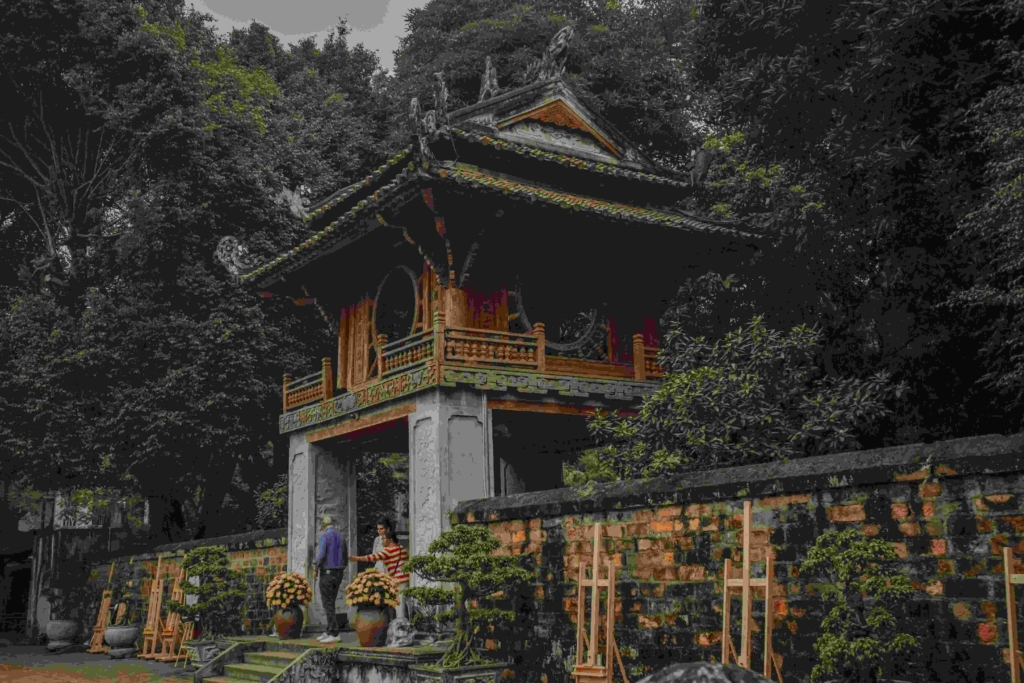
Ho Chi Minh City (HCMC), often referred to by its former name, Saigon, is not just a gateway but a primary engine of Vietnam’s tourism success. In 2025, the city is aggressively pursuing ambitious goals, targeting 10 million international visitors with a heavy focus on quality tourism, digital transformation, and cultural diversity.
Rapidly after the pandemic in the last years, HCMC is moving beyond historical sites. Key focus areas include eco-agricultural tourism in the city’s surrounding districts; the bleisure trend or can also be called a bizcation or workation, which involves extending a business trip for personal vacation time, or working remotely from a different location for a period of time that includes leisure activities; and the expansion of MICE (Meetings, Incentives, Conferences, and Exhibitions) travel.

Travelers arriving in 2025 onwards will benefit from ongoing infrastructure upgrades, including the opening of the Tan Son Nhat Airport’s Terminal 3 in last April, which serves for thousands of domestic flights connecting Ho Chi Minh City with all local destinations in Vietnam. The new terminal, which dominates mostly by Vietnam Airlines, is designed to significantly improve efficiency and the passenger experience.
Moreover, HCMC is catching up with international demands for high-end stays and conferences. The city is cementing its status as a luxury destination with the growth of high-profile properties, including the international hotel chains as well as local-owned boutique luxury 5-star brands like The Myst Dong Khoi Hotel enhancing the high-end leisure market.
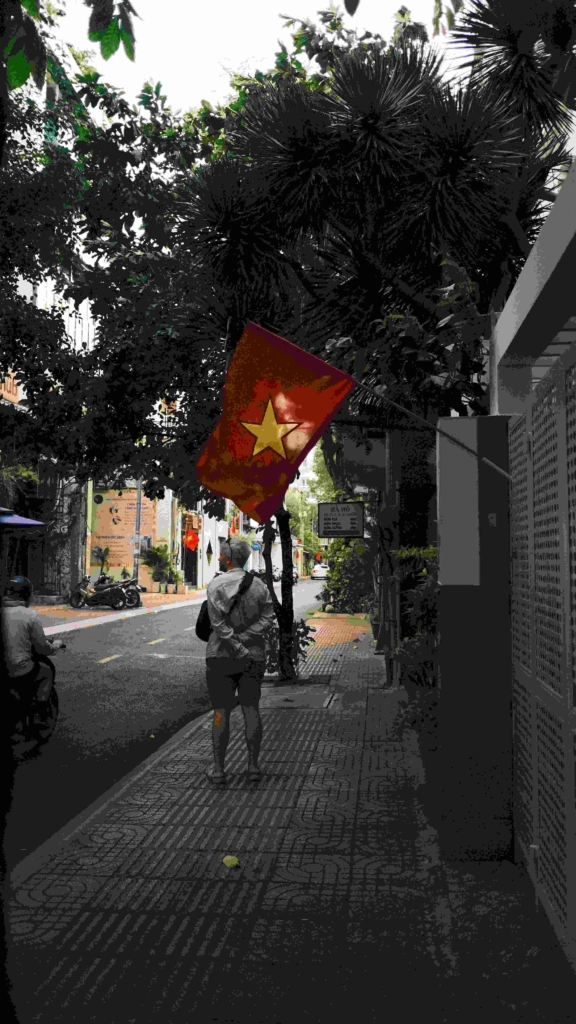
Given the history, a natural question for some U.S. travelers should arise including “Is there anti-American sentiment?” The answer from industry experts and travelers on the ground is an emphatic No. Many travel professionals confirm that local attitudes are "surprisingly warm," and American travelers are welcomed with curiosity and genuine Vietnamese hospitality. You are seen as a modern-day visitor, not a figure from history.
Here are some practical tips for the U.S. Travelers, which might focus on hassle, not harm. The biggest annoyances for American tourists are not serious crime, but low-level chaos and scams. Here’s how to navigate them:
- Chaotic Traffic - You should convince yourself to walk slowly and steadily. Do not hesitate or stop abruptly. Drivers will flow around you.
- Taxi and/or cyclo scams - In case you have to use a car to transport between destinations, stick to trusted hailing apps like Grab or Be or reputable, metered taxis like Mai Linh or Vinasun to prevent overcharging.
- Bag snatching - Secure Your Phone and Bag. In crowded areas of HCMC, keep your phone off the curb and wear your crossbody bag in front of your body to deter drive-by snatchers.
- Water safety - Remember, Vietnam is not a tapped water place, thus bottled water only. Do not drink tap water, and it's best to use bottled water even for brushing your teeth and rinsing your mouth. Also, you might skip the ice cube if you are uncertain of the source.
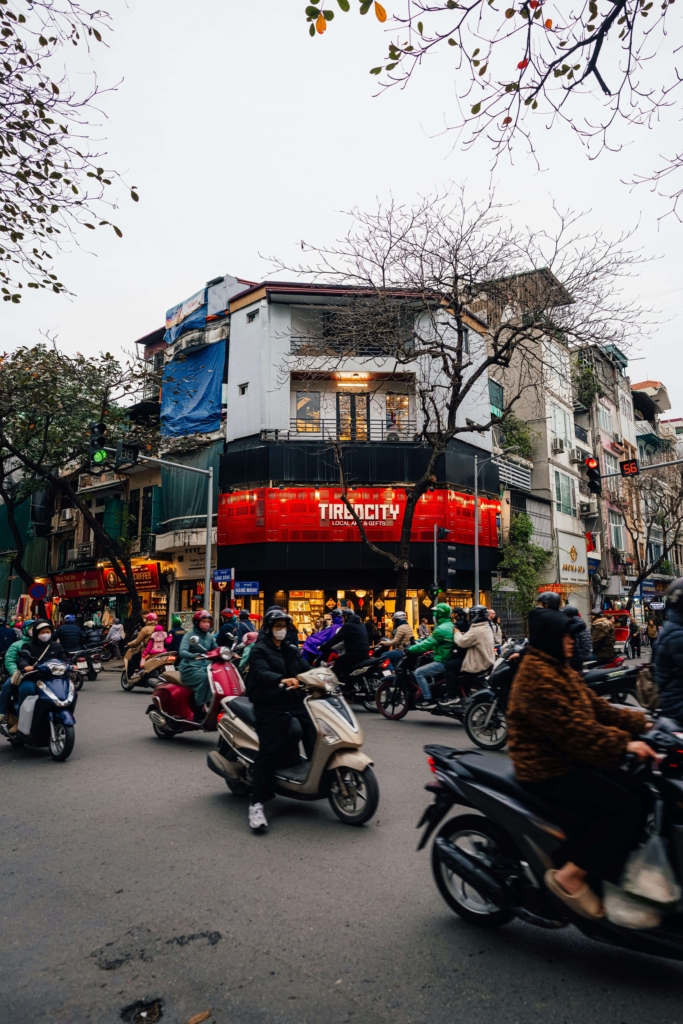
The Solo Traveler's Sanctuary - Security on Your Own
For solo travelers, especially women, Vietnam is consistently ranked as one of the safest destinations in Southeast Asia. International solo travellers and bloggers who have traveled the length of the country alone describe never feeling "on-edge or anxious."
During daytime, the risk of physical harm to those who love to travel solo is extremely low. You're far more likely to be asked about your age or marital status (a benign cultural curiosity) than to be harassed. Big cities are relatively safe at night too, especially in Ho Chi Minh City, where the nightlife lasts forever. Locals socialize late, keeping the streets bustling until well after midnight. Solo travelers can generally feel comfortable walking back to their accommodation, though normal city precautions apply.

The main risk for solo travellers is petty theft and financial scams, luckily, is not physical harm. Stay smart by being aware first of all to avoid those motorbike rental scam. In all cases, refuse to leave your passport, on the other hand, offer a cash deposit instead. Moreover, you should document the bike with photos/video before renting to prevent damage charges.
While hanging around on the streets, travellers may face those so-called "friendly" scams by the street vendors. In these cases, say No firmly. If a vendor tries to give you a flower, a coconut, bracelet, or food sample, they will then demand an exorbitant payment. Walk away quickly.
You will become a millionaire in Vietnamese currency the moment you exchange some of USD50. Get yourself familiarized with the colors. Do not be confused, the 20,000 VND and 500,000 VND notes look confusingly similar (blue color). So count your change carefully every time.
Last but not the least, beyond crimé, health and environmental security are surely put in high note. True travel safety also encompasses health awareness. A few simple precautions to ensure a smooth, healthy trip for you and your beloved ones including street food safety, insects and air pollution.
For the street food, enjoy the pho and banh mi. Many foreign travellers who come to Vietnam admitted they can have these two very popular meals almost every day. Wisely trust the local crowds and choose those busy stalls, but ensure your meal is thoroughly cooked. Whereas for insects, mosquitos are the biggest health threat, which may carry Dengue fever, especially during the rainy season. You should use a DEET-based bug spray and wear light, long-sleeved clothes during dawn and dusk. Finally about air pollution, cities like Hanoi and HCMC can have poor air quality. If you have respiratory issues, carry your medication and consider wearing an N95 or surgical mask when commuting
In conclusion, Vietnam has moved past being an "exotic" travel experience; it is a globally certified, data-backed secure choice. Ready to explore Vietnam? Learn why Vietnam is the golden standard for safety? Which part of the country are you most excited to visit first: the bustling South (Ho Chi Minh City or Mekong Delta), the cultural center (Hoi An ancient town or Hue’s citadel), the dramatic North (Hanoi capital or Ha Long Bay)? Book your trip with confidence, exercise basic city smarts, and prepare to be welcomed with warmth that is the hallmark of this rising Asian star.
Blog
Ho Chi Minh City, or Saigon, is always bustling with the sounds of engines and horns from thousands of cars and motorbikes on the roads, the aroma of coffee from every street corner and alley, and the hustle and bustle of life in this Vietnam's leading economic hub. The city will always captivate visitors with its full energy, but also raises a cautious but familiar question: "Is Ho Chi Minh City safe?". The short answer, according to official sources and long-time expats in this city, is "Yes".
Is Ho Chi Minh City safe?
Vietnam has been one of the safest destinations in Asia for many years now. Especially since the global pandemic, the country on the East Sea has had spectacular changes and policies to boost the economy as well as tourism quickly and effectively. Ho Chi Minh City, like any large metropolis, requires visitors to have situational awareness and some street knowledge. Join The Myst Dong Khoi Hotel to learn tips for travelers from the experiences of foreigners who have come, fallen in love, and chosen to stay and live and work in Saigon.
The Australian's Smartraveller ranks Vietnam in the "Practice common sense" group, while Berkshire Hathaway Travel Protection (BHTP) ranks Vietnam as one of the ten safest countries to travel to in 2025, describing it as "a fascinating destination with plenty to see, try, and taste". However, don't let your guard down with predictable risks, including:
Petty crime isn't too dangerous
Most of the problems in Ho Chi Minh City stem from petty theft, not violent crime. "Snatching handbags from motorbikes and pickpockets in crowded markets are the most common threats," Smartraveller notes.
Thieves often target tourists' mobile phones, hand bags or cameras. Snatchings are common in crowded areas such as the Bui Vien nightlife neighborhood or around Ben Thanh market. Fortunately, violent crime against foreigners is quite rare in Ho Chi Minh City. For most visitors, a little vigilance is enough. Many visitors say they return from Saigon with their trust in the honesty of the locals still intact. So how can you stay safe?
- Wear your bag across your body and keep it to one side, away from the road, as thieves can jump off a motorbike and snatch items from your hands or body.
- Avoid exposing electronic devices (phones, cameras, etc.) or expensive jewelry when walking on the street.
- Use the hotel safe to keep your passport, cash, valuable items and only carry what you need when exploring.
- At night, stay away from deserted or poorly lit areas.
- When approached and pursued by street vendors, shoe shiners, and currency exchangers, refuse their offers with a firm and polite “No, thank you.”
Traffic chaos and how to travel safely
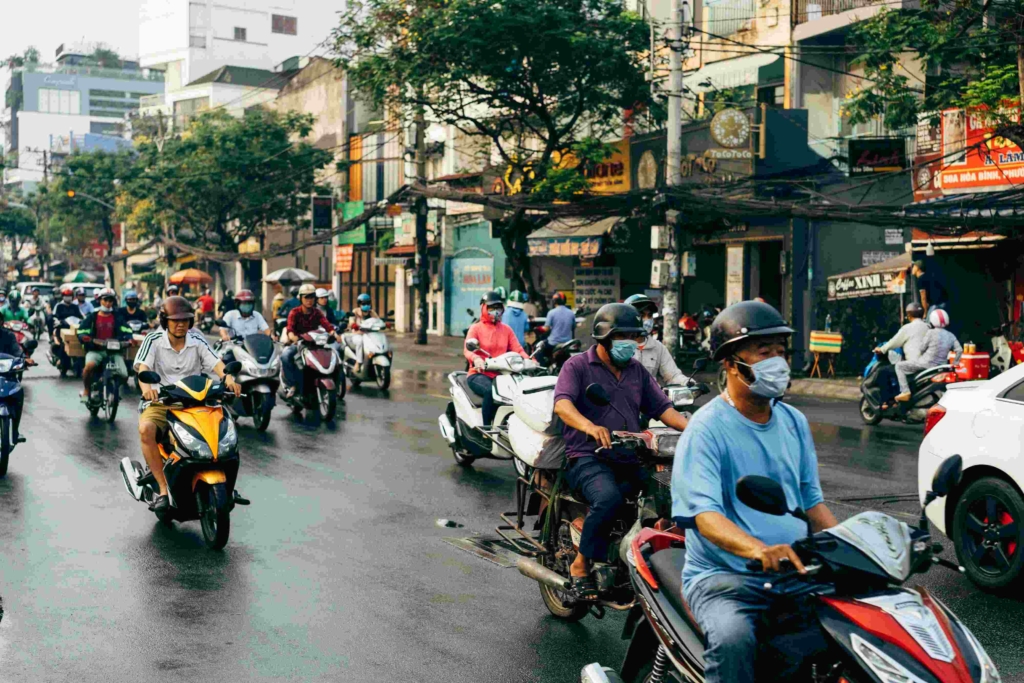
If theft is not a main concern, the roads may be. For first-time visitors to Saigon in particular and Vietnam in general, traffic on the streets can be likened to an elaborately choreographed chaos with motorbikes and cars weaving haphazardly, honking from all directions, and small motorbikes that can carry entire families and sometimes entire retail shops. Hence, crossing the street can be both a challenge and an exciting experience for many visitors.
BHTP warns: “Vietnam’s traffic looks chaotic to international visitors. Motorbikes dominate the roads, weaving through traffic in seemingly impossible ways.” Therefore, to travel safely, The Myst Dong Khoi Hotel has a few tips for you as follows:
- Use reputable taxi companies (Vinasun, Mai Linh), or identify these taxi companies by the logo on the body of the car. Confirm the fare or make sure the meter is running before starting.
- You can also download popular ride-hailing apps like Grab or Be (similar to Uber and Lyft) to know in advance exactly how much you will have to pay for the distance you need to travel
- If you are inexperienced, you should consider carefully before renting a motorbike even though this can be attractive and convenient. There have been many accidents involving foreigners due to unfamiliarity with roads and traffic laws as well as the movements of local people.
- And if you walk, cross the street slowly and predictably. An important tip is to raise one arm to signal cars and motorbikes moving on the road, the drivers will give way to you or move around you.
Simple ways to stay healthy while on the go
Saigon’s tropical climate and vibrant street food culture are part of its appeal. However, as a first-time visitor, you should also take some precautions.
According to the Vietnam National Administration of Tourism, “petty theft can be a concern, but food hygiene and health issues are the most common issues tourists face.” Travelers are advised to bring bottled water, insect repellent, sunscreen and a basic first aid kit. BHTP adds: “In the event of serious illness or injury, visitors may need to be evacuated to Thailand or Japan.”
The Myst Dong Khoi Hotel would like to offer some essential health advice before and during your trip:
- It is advisable to purchase travel insurance prior to your trip that covers medical evacuation if necessary.
- If you have asthma or allergies, be aware that air quality in Saigon can fluctuate, with some days of the year seeing some of the worst air quality in the world.
- Remember to use mosquito repellent, gel or stickers to prevent dengue fever or Zika.
- When exploring the city and surrounding areas, drink bottled water with quality inspection stamps and avoid using ice cubes in uncertain locations.
- Street food is always appealing, but choose stalls that are crowded, as high turnover means fresh food every day.
- Check the weather before and during your trip to Ho Chi Minh City. Although the area is rarely affected by floods and natural disasters, heavy rains during the southern monsoon and high tides can easily disrupt your planned trips.
- Hospitals in Ho Chi Minh City are improving in quality, but private or international clinics are still the best choice for foreign visitors. Some reputable addresses to consider are: Family Practice Clinic, Pathway Clinic, Victoria Clinic, Tam Anh Hospital, FV Hospital, Hoan My Hospital ...
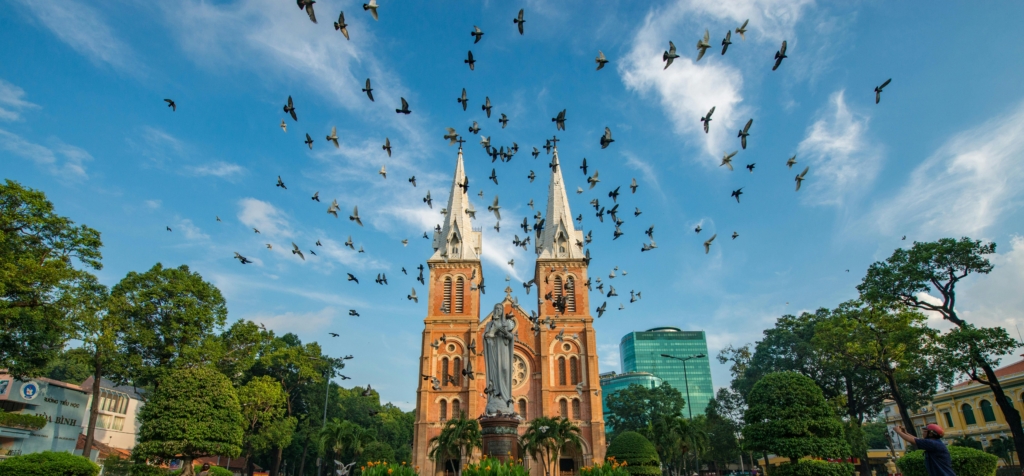
Laws and local customs
Most visitors and expats who have lived in Ho Chi Minh City for many years describe this place as an extremely friendly city. Hospitality is ingrained in Vietnamese culture, many visitors find themselves treated more like family than tourists. It is not uncommon for a stranger on the street to help tourists call a taxi, talk to a street vendor, give directions or return lost items. In addition, this largest metropolis in Vietnam has very reliable and secure policies to protect tourists.
However, the country's laws are very strict. Drug trafficking is punishable by death, and crimes that disturb public order, whether by locals or international visitors, are strictly handled. In addition, tourists are advised not to take photos or film near military facilities or government buildings.
At the same time, it is also necessary to show respect at religious and historical sites. Visitors should wear polite clothes, cover their shoulders and wear clothes that are longer than the knee when visiting these places. This is a basic requirement that must be understood in order to be able to visit freely.
Final words - Safe city, but be wary
Ho Chi Minh City is safe. The risks are the same as any vibrant urban environment: pickpockets, traffic chaos, and the occasional scams. But with awareness and preparation, the city is sure to reward you with warm smiles, delicious food culture, and the deep soul of the Vietnamese people. Don’t hesitate to prepare your adventure spirit, pack your bags, and head to Saigon, a city safe enough to explore and exciting enough to get your heart racing.
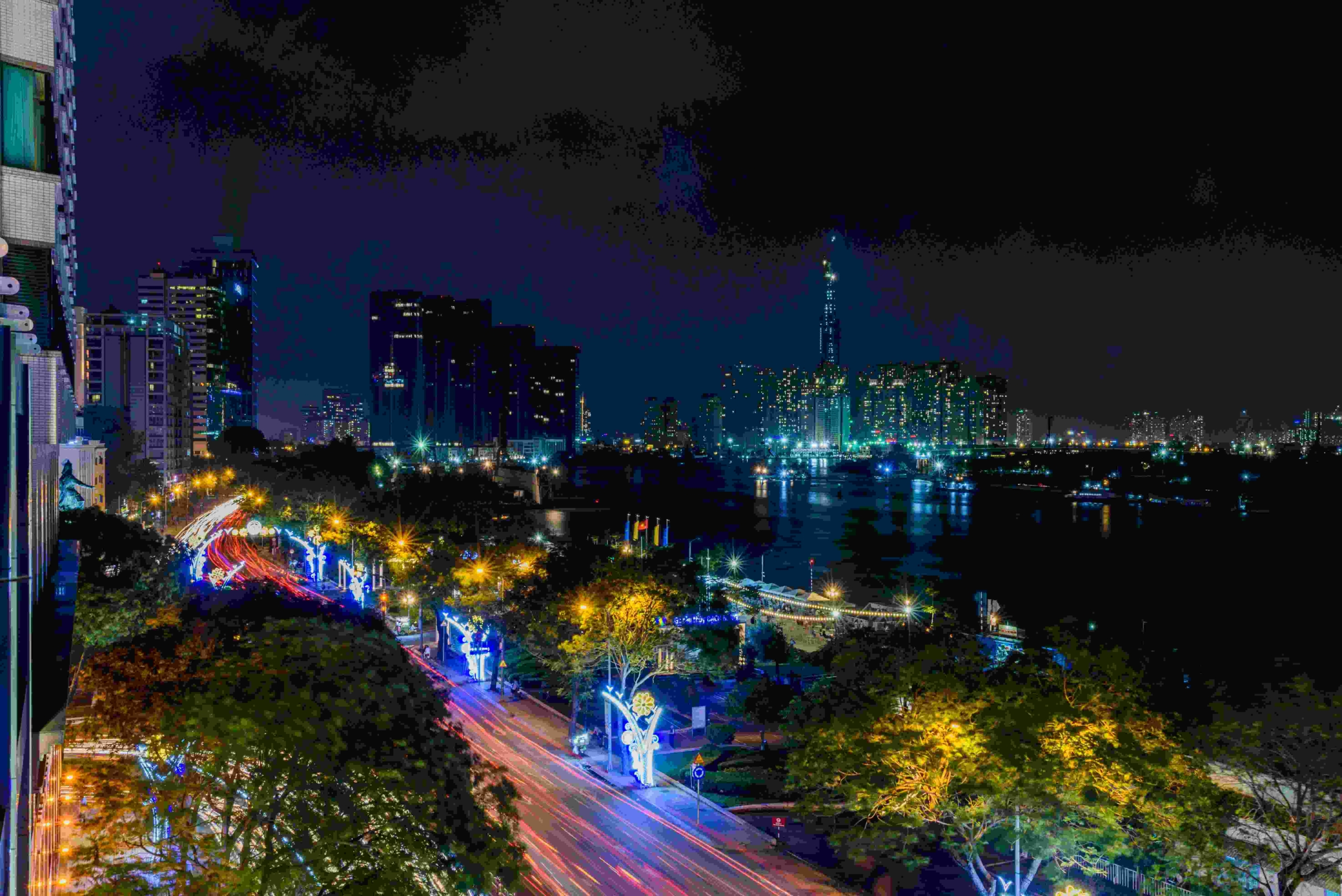
Blog
If you have only a few days in Ho Chi Minh City and still want to gain a deeper understanding of the culture, history, and national spirit of the Vietnamese people, a day trip to the Cu Chi Tunnels is an activity not to be missed.
From the modern urban center of Ho Chi Minh City, it only takes a bit over 1 hour to be guided to a land that was once a symbol of resilient underground life—where there is a tunnel system of more than 200 km, which used to be a resistance base, infirmary, meeting bunker, kitchen, and even an “underground village” during decades of war.
Introduction to Cu Chi Tunnel – “underground city”
The Cu Chi Tunnels are located in An Nhon Tay Commune (formerly Cu Chi District), about 70 km northwest of Ho Chi Minh City's center. The tunnel system began construction in the 1940s, expanding through the stages of resistance against France and the US, becoming a military and tactical symbol of the Vietnamese forces during wartime.
With more than 200 km of continuous tunnels, the tunnels are a living testament to:
- The survival and creativity of the Vietnamese people
- Unique underground guerrilla strategy
- The persistent will to fight for peace and independence
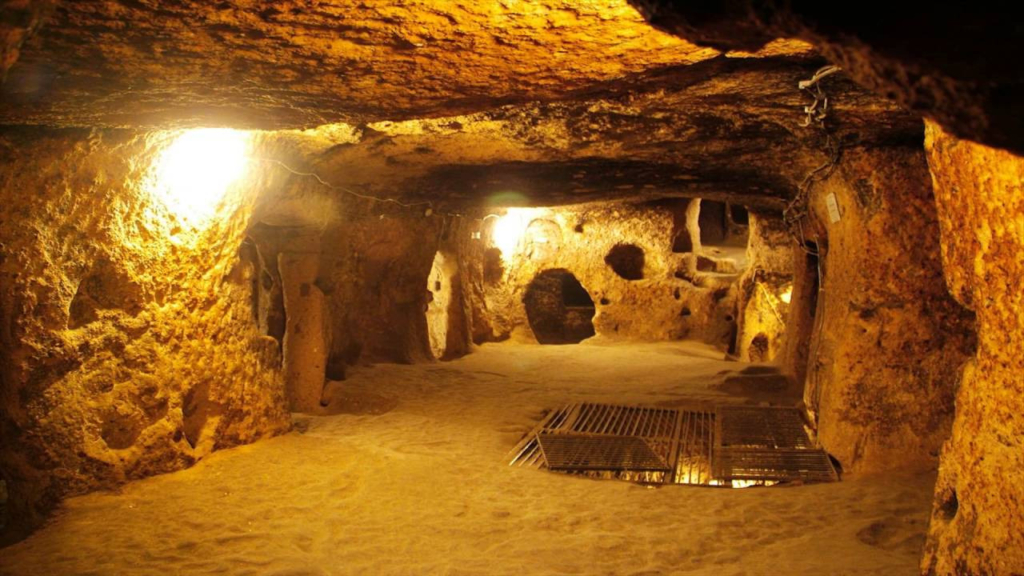
Why take a Cu Chi Tunnels tour from Saigon?
- 🚐 Only 1.5 hours from Ho Chi Minh City's center
- 🌿 See Vietnamese countryside & rubber plantations
- 📚 Understand the war from the local perspective
- 🕳️ Walk through actual tunnels used during the war
- 🎯 Optional shooting range experience
- 🍠 Try local wartime food (cassava, coconut water)
- 👨👩👧 Tour options available for solo travelers, couples, families & groups
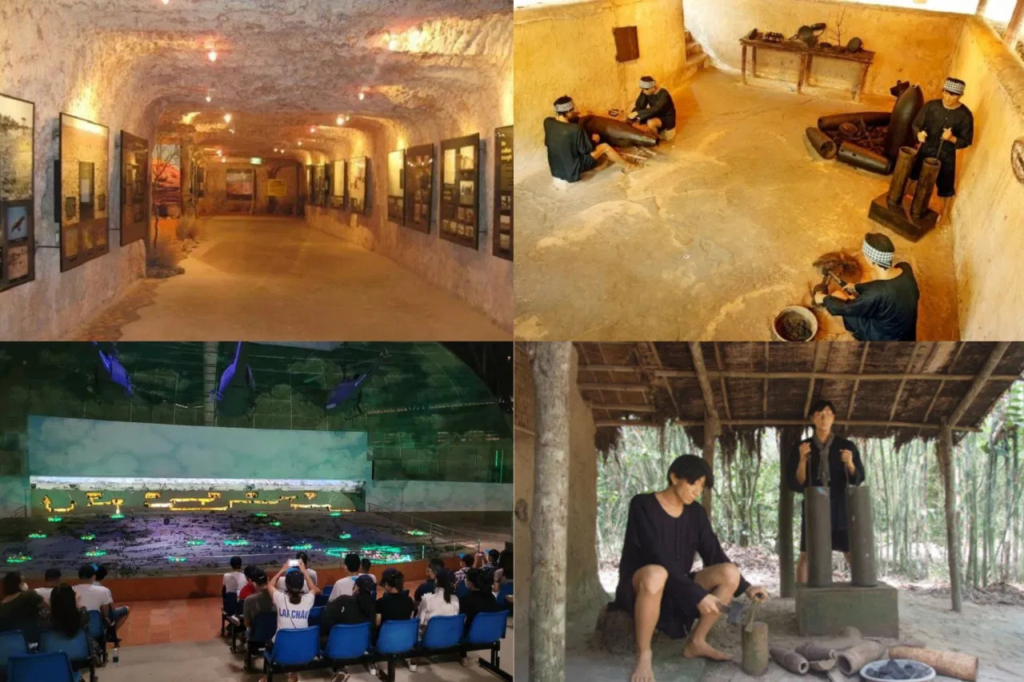
Experience Cu Chi Tour – what to expect on the tour?
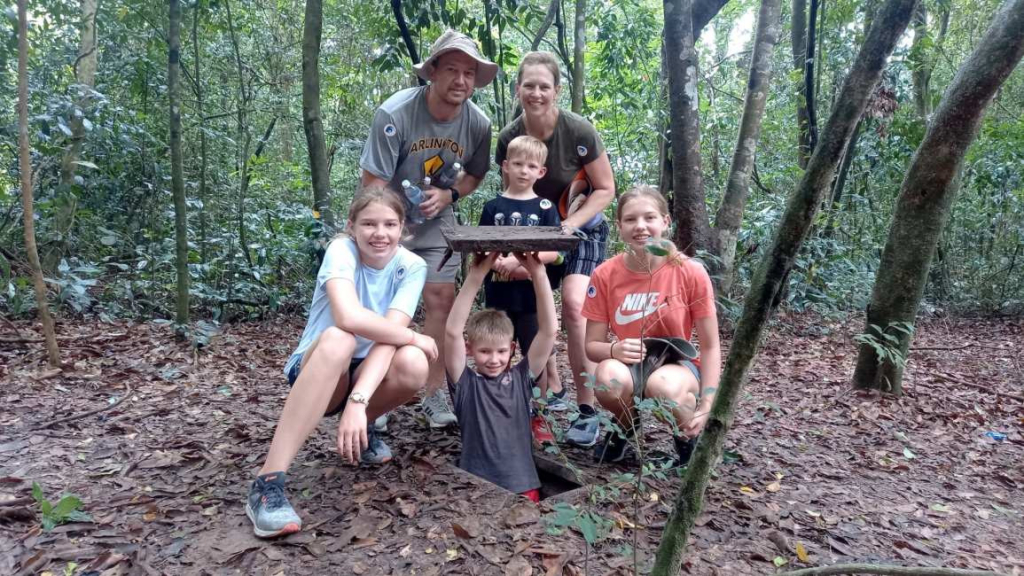
1. Go through the underground “maze”
You will have an opportunity to crawl through the narrow dark tunnels and to experience the feeling of claustrophobia like the soldiers who lived and fought here. There is a path several dozen meters long for visitors to test their endurance and spirit.
🧭 You can choose the length of the tunnel depending on your physical ability
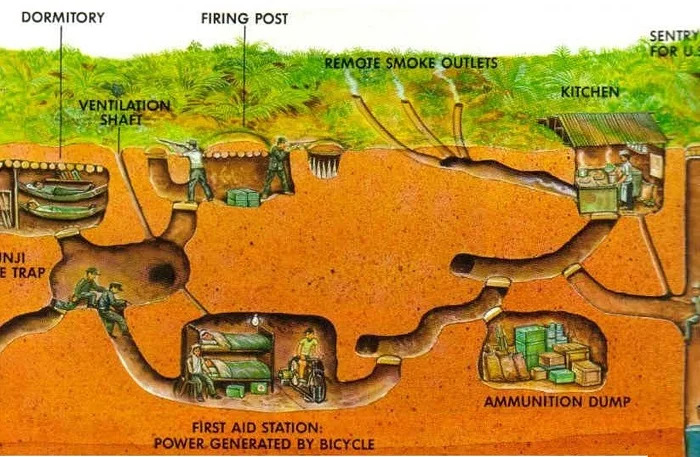
2. Visit Hoang Cam kitchen, meeting room, and infirmary
These structures are still preserved in their original state or restored to real scale, helping visitors visualize more clearly the “underground village” during the war - a place for collective activities, cooking, organizing meetings, and caring for wounded soldiers in dark, deprived conditions.
3. Watch documentaries, artifacts, and simulated battlefields
You will start the tour with a short documentary, followed by an area displaying weapons, models of bombs, war traps, and historical documentary photos. This is where you will gain a deeper understanding of the fierce historical context in which the tunnels were born.
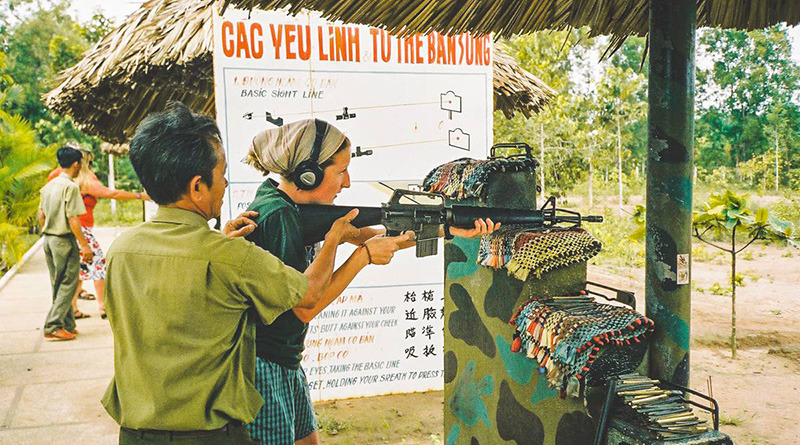
4. Shooting real guns (optional)
One of the unique experiences is to try shooting military rifles such as AK47, M16, or M30 at the simulated shooting range. (Fees apply. ID may be required)
5. Enjoy Cu Chi specialties
Don't miss boiled cassava with sesame salt, fresh coconut water, or grilled rice paper - rustic dishes that were once "golden food" during wartime. The cuisine here is simple but has profound cultural value.
6. Experiencing folk culture
Many package tours also combine visiting craft villages, farming vegetables in the traditional way, or learning to make rice paper - a gentle way to learn more about rural life in Vietnam, past and present.
Tour options & prices (2025 update)
| Tour Type | Duration | Price Range (VND) | Includes |
|---|---|---|---|
| Half-Day Tour | ~5 hours | 400,000 – 600,000 | Tunnels, museum, transfers |
| Full-Day Tour | ~8 hours | 800,000 – 1,200,000 | + local village, lunch |
| Private Tour (1–2 pax) | Flexible | 2,000,000 – 3,000,000 | Personalized with private vehicle |
| Group Tour (3–5 pax) | Flexible | 3,000,000 – 4,500,000 | |
| Entrance Ticket Only | Self-guided | 90,000 – 110,000 | No transport or guide |
🎯 Tip: Always check if your tour includes hotel pickup/drop-off, lunch, and a licensed English-speaking guide.
When to go
☀️ Dry Season (Nov–April): Ideal for walking, clean trails, better conditions in the tunnels
🌧️ Rainy Season (May–Oct): Still possible but expect slippery paths and mud
What to pack
- Comfortable shoes & light clothes
- Water bottle
- Insect repellent
- Flashlight (optional but helpful in the tunnels)
- A hat or cap for outdoor portions
- ID/passport (if planning to shoot or book private services)
Should you hire a guide?
Yes, especially if you want context. A good guide can:
- Translate Vietnamese signage and stories
- Provide war anecdotes from local families
- Help you navigate complex exhibits
- Ensure safety in the tunnels, especially with kids or elders
Traveling with children?
- Recommended age: 6+ years old
- Avoid crawling tunnels with toddlers or kids afraid of dark/small spaces
- Use guides to offer kid-friendly explanations of war history
- Keep a close eye on children in open museum spaces and stairwells
Returning to Saigon – where to stay?
After a day of exploring the past, there is nothing better than returning to a warm, welcoming and aesthetic place – a place not only for resting but also a part of the Saigon experience:
The Myst Dong Khoi – a 5-star boutique hotel in the heart of Saigon
Tucked away on Ho Huan Nghiep Street, just steps from Nguyen Hue Walking Street, The Myst Dong Khoi invites you into a sanctuary of quiet charm – where old Saigon is thoughtfully preserved and reimagined in every detail.
Here, your stay becomes a cultural narrative:
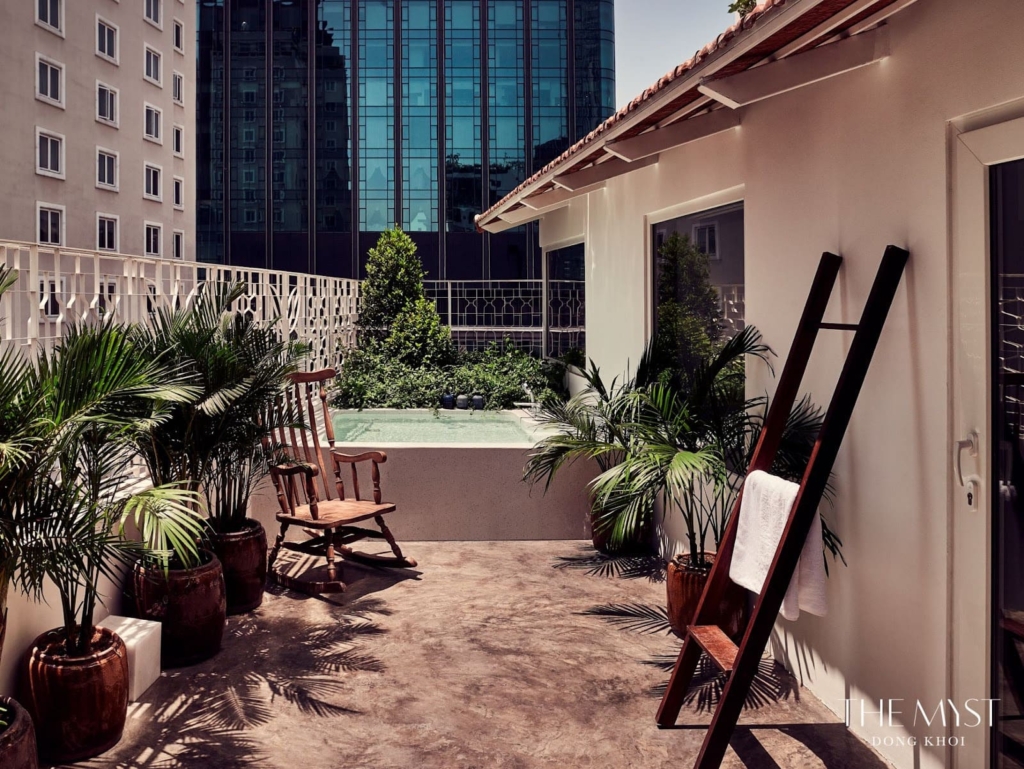
🛏️ Heritage-inspired rooms with garden bathtubs on the balcony
🌇 Rooftop pool & sky bar for golden-hour views of the city
🍵 Complimentary daily afternoon tea & Saigon-style minibar
🚘 Personalized services including airport transfer & private tours
📚 Local artistry and cultural textures woven into the design and ambiance
Don't just “visit” Saigon, touch each layer of its history
Cu Chi is not a tourist attraction. It is a living chapter of history. And to truly feel it, start at the heart of culture – from the heart of the city, where every church bell, every bougainvillea trellis, every alleyway still whispers the old story – The Myst Dong Khoi.
✨ Book your stay at The Myst Đồng Khởi
🛎️ Ask our concierge to arrange a personalized Cu Chi Tunnels tour tailored to your schedule, group size, and interests.
Blog
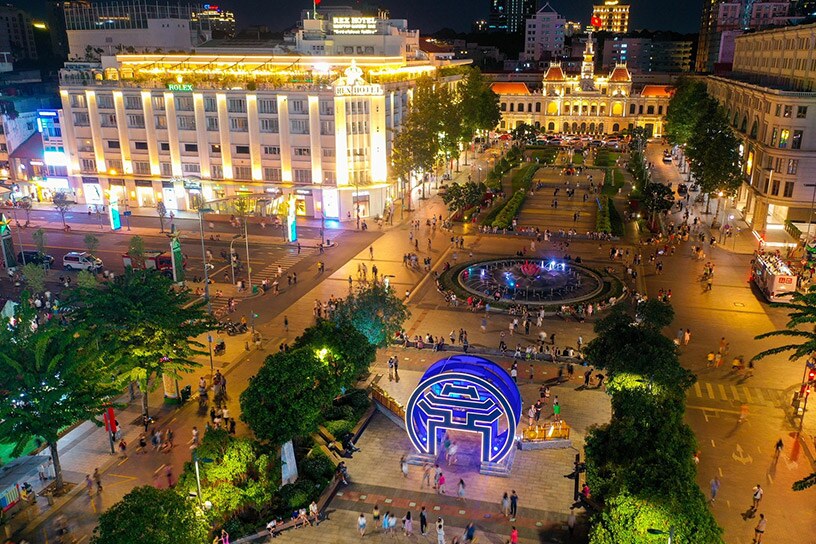
Nguyen Hue Walking Street is a must-see location whether you're visiting Ho Chi Minh City for the first time or have been there before and want to get a true sense of the city. It's more than just a public square; it's the vibrant, youthful, and dynamic center of contemporary Saigon, with a strong historical foundation. This boulevard, which is only a short distance from The Myst Dong Khoi, is the ideal place to begin exploring the city's history and dynamic urban rhythm.
From the Charner Canal to Saigon’s Grand Boulevard of Light
Back in the days, Nguyen Hue was once a large waterway—Charner Canal, built in the 19th century. After the French colonial era, it was filled in and became a bustling boulevard, officially renamed Nguyen Hue in 1956.
Today, the walking street stretches almost 900 meters, from the Ho Chi Minh City People’s Committee building to Bach Dang Wharf, with a width of 60 meters. Since 2015, the street has been fully pedestrianized on weekend evenings, transforming into a public open-air space for locals and visitors alike.
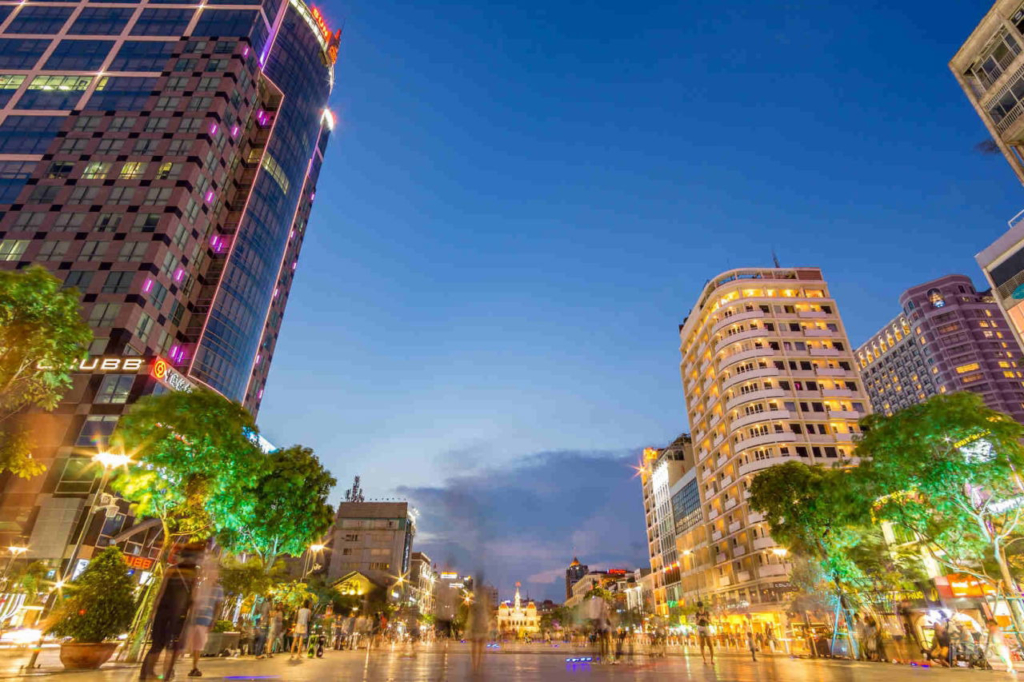
The Pulse of Modern Life on Nguyen Hue
During the day, the boulevard is a place to people-watch. By night, it turns into a dazzling outdoor stage of lights and sounds. Street performers gather—K-pop dance groups, acoustic guitarists, portrait sketch artists, tarot readers, and LED light shows all find a space here.
Equally iconic is coffee culture—the soul of Saigon. On Nguyen Hue, you’ll find everything from quirky indie cafés hidden in old apartment blocks to global coffee chains with panoramic views of the street. Each floor, each cup, tells a story.
Nguyen Hue Walking Street is also where the city gathers for its biggest public events. Come here during any major football match involving Vietnam’s national team, or during public holidays like Reunification Day, National Day, or New Year’s Eve, and you’ll be amazed by the electric energy of local crowds.
During Lunar New Year (Tết), Nguyen Hue transforms into a stunning floral promenade known as Nguyen Hue Flower Street. For about a week, the boulevard becomes a pedestrian-only zone, decorated with thousands of fresh flowers and greenery, following a different annual theme. This tradition dates back to 2004, and has grown into one of the city's most anticipated Tết events.
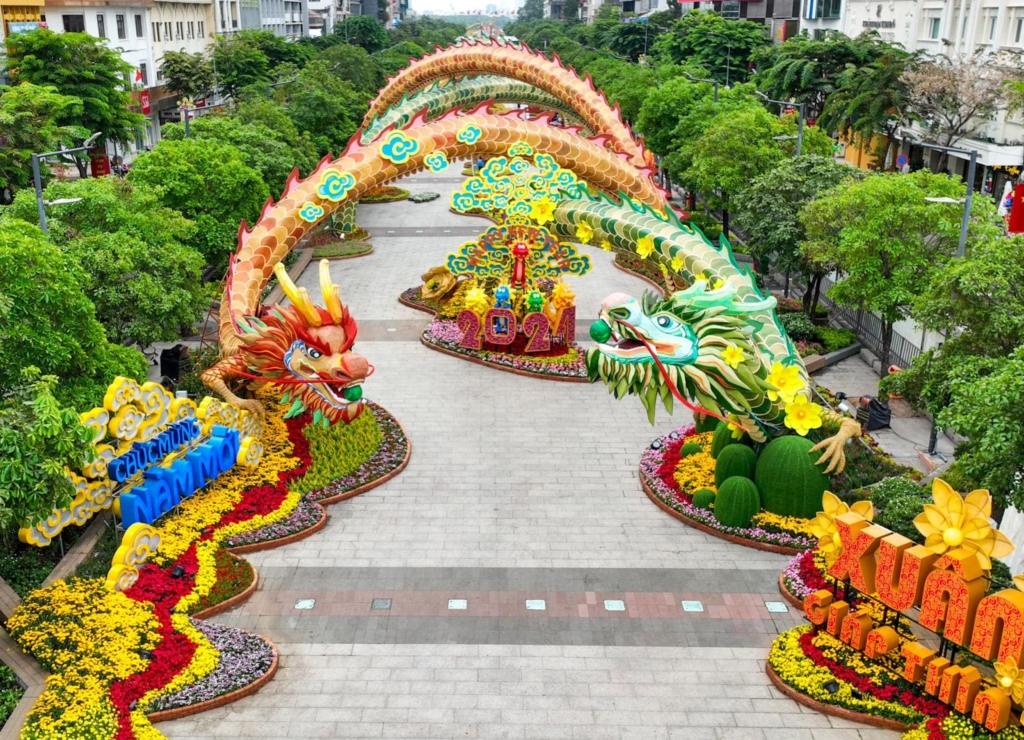
Unmissable Stops Along Nguyen Hue Walking Street
🏛️ HCMC City Hall – A French Colonial Icon
Formerly the Hotel de Ville, the Ho Chi Minh City People's Committee building was completed in 1901 and is one of the most impressive surviving examples of colonial architecture. Since 2024, the building has been open to the public on the last weekend of every month—a rare chance to admire the intricately carved woodwork, grand archways, and stately interiors.
☕ 42 Nguyen Hue Apartment Block – The Coffee Complex
This former residential apartment building has been reborn as a creative hub of independent coffee shops, art studios, and local boutiques. Just take the stairs (or pay 3,000 VND for the elevator), and discover a new surprise on each floor.
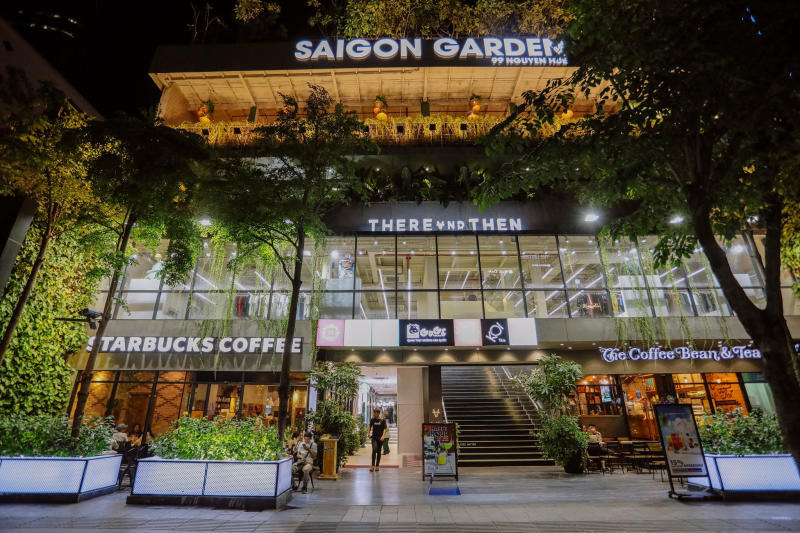
🌿 Saigon Garden – Green Urban Oasis
Located at 99 Nguyen Hue, Saigon Garden stands out with its green façade and industrial-chic architecture. You’ll find everything from Starbucks and fusion restaurants to flower shops and bookstores—all in one leafy, photogenic space.
🏛️ State Treasury Building – Echoes of the Old Market
Right in the middle of the walking street is the State Treasury Building, which once stood on the site of Saigon’s old central market (before Ben Thanh was built). Though closed to the public, its classic French exterior, terracotta roof tiles, and wooden balconies remain an architectural highlight.
🌊 Bach Dang Wharf Park – By the River, Among the Lotus
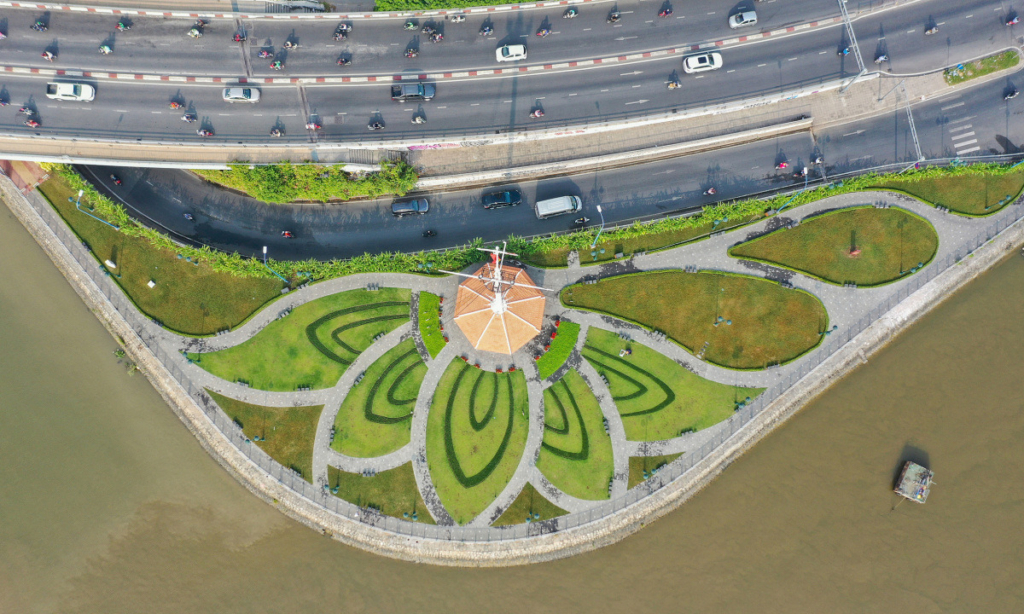
At the end of Nguyen Hue lies Bach Dang Wharf Park, a serene, lotus-shaped public park with stone pathways and green lawns. It’s the perfect place to relax after your walk.
A highlight here is the historic Thu Ngu Flagpole, built in 1865. Originally a signal tower for ships entering Saigon Port, it still stands today—a proud witness to the city’s maritime legacy.
Tips to Enjoy Nguyen Hue Walking Street to the Fullest
Go after 6 PM: The air is cooler, the lights come on, and performances begin.
Wear comfortable shoes: You'll be walking a lot!
Explore balcony cafés: The upper floors offer stunning views of the entire street.
Visit during Lunar New Year: Nguyen Hue Flower Street is the biggest event of the year.
Don’t skip the side alleys: You’ll find hidden cocktail bars on Ngo Duc Ke or speakeasies on Mac Thi Buoi.
Where to Stay to Experience Nguyen Hue at Its Best?
The Myst Dong Khoi, a five-star boutique hotel created to be a part of the city's living narrative, is a short distance away if you want to fully experience the magic of Nguyen Hue Walking Street
With reclaimed wood from the old Bason Shipyard, outdoor stone bathtubs, and antique mosaic tiles, each floor of The Myst captures a different aspect of Saigon's history.
At The Myst Dong Khoi, You Can:
- 🌿 Soak in your own outdoor private Jacuzzi tub
- ☕ Enjoy a coffee at Bason Café, a living tribute to Saigon’s maritime past
- 🌇 Watch the city awaken from the rooftop pool
- 🍸 Sip a cocktail at Rooty Bar, where the city lights sparkle into the night
You can walk to the heartbeat of Nguyen Hue Walking Street, which is more than just a boulevard.
Each paving stone has a unique story to tell. Each light evokes a memory. And you get closer to the real spirit of Saigon with each step.
Let this be the starting point of your adventure, where you can feel the city rather than just see it.
✨ Book your stay at The Myst Dong Khoi to wake up just a few steps from Nguyen Hue, and be part of the city's most vibrant rhythm—morning, noon, and night.